Why Local SEO Drives Real Business Growth
Most small businesses don’t struggle because their product is bad — they struggle because not enough people nearby know they exist. Top Local SEO Strategies for Small Business Owners can mean the difference between a slow trickle of customers and a steady wave of foot traffic and phone calls. Searchers hungry for what you offer live only a few blocks away, but Google and Apple Maps will hide your shop if your online presence isn’t tuned precisely.
You face an uphill battle in 2026: algorithm shifts, competitors buying up sponsored map results, fake reviews swamping trusted directories, and customers whose path from search to signup can zigzag through a dozen platforms before you ever see their face. The basics no longer cut it. NAP consistency, review velocity, and citations matter more than they did four years ago, and the cost of falling behind even for a quarter is higher than most owners realize. This new reality needs real tools.
See firsthand how businesses in your space outperform their competition using BrightLocal and tools like Local, Semrush, Yext, Whitespark, Google Business Profile, Birdeye, and Synup. This guide cuts through vague advice and delivers the Top Local SEO Strategies for Small Business Owners ready to implement right now. The guide walks you through every step, offers clear side-by-side comparisons on pricing and features, and backs it all up with case studies designed for easy replication. Each one is designed for fast execution and long-term impact, so you know which to test this quarter. Results are measurable, and the fastest returns will surprise you.
- BrightLocal — Offers campaign management features custom for multi-location businesses managing several listings.
- Alternative options Local — Entry-level plan starts at approximately $14 per month for small business local SEO.
- Semrush — Includes integration options with Google Search Console for complete local SEO analytics.
- Yext — Paige automated AI tool included for boosting local search rankings on all paid plans starting at $14 per month.
- Whitespark — Provides Google My Business management tools custom for local SEO strategy in 2026.
- Google Business Profile — Integrates with Google Analytics, allowing tracking of engagement and search performance metrics.
| Product | Our Rating | Best For | ||
|---|---|---|---|---|
 |
1BrightLocal |
4.2/5
|
Local SEO campaign management | Read More |
 |
2Moz Local |
4.4/5
|
Local citation management | Read More |
 |
3Semrush |
4.2/5
|
Local SEO optimization | Read More |
 |
4Yext |
4.5/5
|
Affordable local SEO automation | Read More |
 |
5Whitespark |
4.5/5
|
Local SEO campaigns | Read More |
 |
6Google Business Profile |
4.4/5
|
Local reach management | Read More |
 |
7Birdeye |
4.2/5
|
Paige, the automated AI tool | Read More |
 |
8Synup |
4.7/5
|
Includes free tools for keyword | Read More |
BrightLocal for Small Business Local SEO
It doesn’t hand out a free tier, not even a trial you can poke around without signing up. BrightLocal is built for a narrow purpose: local SEO for companies with many physical places or agencies juggling clusters of listings. Freelancers hunting for quick info hit a wall fast — the pricing table hides behind a registration step. BrightLocal pushes away dabblers and gathers only real buyers, clients that expect to stick around, not play hopscotch with short-term tests or fish for the cheapest deal.
Other solutions Local shows its prices and opens up basic analytics right away. It steers towards organizations that need power — a team staring down dozens of listings, not just sweeping up scattered citations. One account with many sites? That’s the sweet spot. But if you run a small outfit, pricing hidden behind an email wall feels slippery, and not seeing upfront what you’ll get from reports makes it hard to pitch the expense to your boss. Some buyers close the tab.
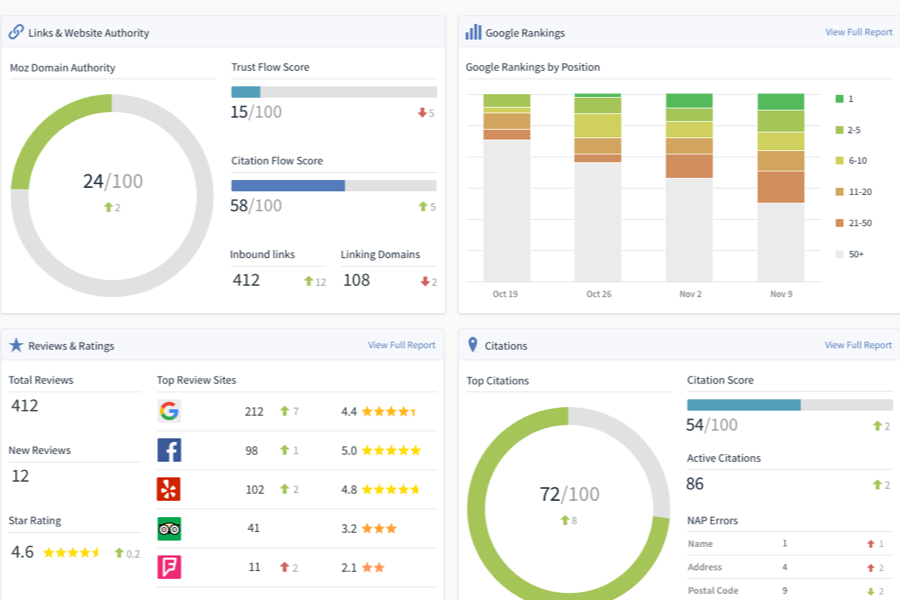
The platform strips away the usual broad SEO toolkit and drills deep into problems that brick-and-mortar chains or service firms face. BrightLocal cuts out the fluff. Tools focus on keeping locations visible, reviews corralled, and metrics lined up across many spots — a thicket of listings, not just a single shop. Big agencies prize the platform’s hooks and integrations, even if the onboarding feels tangled and takes real commitment before you see results. Reporting on advanced analytics also hides in the fine print. If you want smooth, fast dashboards you can plug in and just go, BrightLocal may slam the brakes. Solo users and short-term testers rarely stick.
Multi-location brands — think groups with 25 outlets or agencies managing clusters — soak up most of the benefit. They deal with BrightLocal’s steeper entry and wrangle the complexity. That leaves those casual shoppers and lone SEO freelancers cooling their heels outside the gate.
| ✓ Pros | ✗ Cons |
|---|---|
| Offers campaign management features custom for multi-location businesses managing several listings. | No evidence of a free plan or trial; pricing details require a contact or signup process. |
| Local SEO-focused toolset targets ranking improvements for small and medium businesses. | Advanced reporting or analytics features not specified as included in the base tier. |
| Integrates directly with Google Search Console and Google Analytics for centralized local SEO tracking. | Missing mention of support response times or dedicated customer support tiers. |
 comparable services Local Listings Management
Competing platforms Local’s cheapest plan sits low enough—monthly, predictable—that mom-and-pop shops or solo outfits can jump in without swallowing the bigger price tags or tangled research add-ons Semrush likes to pack in. You don’t get a free plan, though. So you pay upfront every time, which knocks out tinkerers and shoestring folks who just want to poke around before they drop a credit card.
Some find that a headache-in-waiting. The main play here is blasting your business info to every directory that matters. Businesses don’t drown in options or weird analytics widgets—a relief if you hate endless tabs and settings nowhere near the task at hand. You load up your details, and rival tools Local just floods those platforms (roughly). Here’s where the trade-off hits. Semrush and friends pack in chunky analytics, Google Analytics tie-ins, dashboards slicing clicks by the hour. Alternative options Local steers clear. This wall hits fast if you want to see campaign stats, merge analytics from a heap of sources, or get forensic with your local data. As your operation grows, you’re staring at a choice: bolt on extra tools, or abandon ship for something more stitched together.
Upload once. You’re trading deep analytics for dead-simple control over your listings, which might be exactly what you want, at least early on. Scatter your data, perfectly neat, far and wide—missing directory entries, spelling shifts, bad phone numbers—they all fade out. Any brand that craves flawless listing accuracy gets a blunt tool that just works. Google’s restless, search engines ratchet up the rules every quarter, and now citation consistency isn’t just nice—it’s gatekeeping your rank. But if you want to see who clicks, drill into traffic or splice numbers with your sales funnel—nothing here for you.
Curious how this all plugs into bigger local SEO moves as new search rules keep rolling in? Gartner’s got a chunky 2026 report on local SEO platform architecture. Worth a look if you’re mapping out the next few years.

| ✓ Pros | ✗ Cons |
|---|---|
| Entry-level plan starts at approximately $14 per month for small business local SEO. | No free plan available; paid plans start at $14/month, creating a price floor for entry. |
| Distributes business data to major aggregators and directories for consistent citation accuracy. | Does not mention integration with Google Analytics or Google Search Console as of 2024. |
Semrush Local SEO Tool Review
Semrush Local draws a crowd of small businesses, often ones juggling several stores. Free accounts won’t let you tame reviews or use the real location tools—those live behind a paywall. A bakery with five spots in town? Semrush built the platform to help brands cut through the chaos of managing SEO for every address they own. But you hit a wall fast.
Many key local SEO features, like review management, do not show up unless you pay. If you run just one location—or you’re a freelancer—the basic, unpaid plan won’t stretch far enough. Some owners balk at that. Review management is missing from the free version, and that’s non-negotiable for many.
Comparable services Local folds reach and distribution tools into its main offering. Next to other solutions Local, Semrush takes a harder line. It’s friendlier to tiny outfits. Semrush makes you buy the Local add-on if you want proper location management. And the bill climbs (as a rule). In 2026, Semrush Local pricing goes up linearly with each new address you add, so microbusinesses and solo operators can feel squeezed by the cost. A coffee cart with one kiosk? They’ll balk at the investment. Chains, however, thrive here; they need search results corralled for every branch, and Semrush obliges.
A single café might want free review monitoring. Semrush locks that away and won’t budge.
One big plus: Semrush Local weds its local tools to a larger SEO suite. That turns away smaller players who just want a handful of basic review or citation fixes without extra cost. You get to spot-check your local search health, then spin the view out to spot national trends—without leaving the platform. It lets them steer a fleet of SEO campaigns from one place. But that all lives behind a subscription wall. Bulk location management isn’t in the starter price, either.
BrightLocal for Small Business Local SEO
If you run a sprawling franchise or a big-box operation, the platform shines. The data syncs smoothly, and position tracking is sharp—just expect a trade-off around cost and simplicity. Advanced dashboards, unified reporting, tidy data streams—Semrush Local built that for you. Yet a florist or single-location clinic faces a dilemma: pay more than they’d like, or make do with a lighter feature set and patch in third-party tools for gaps like review management.
Want recent numbers and trends? The Semrush annual digital trends report logs how local rankings shift and which tools see the most action.
| ✓ Pros | ✗ Cons |
|---|---|
| Popular among small businesses focusing on improving their local search rankings in 2026. | Lacks built-in review management functionality present in some other dedicated local SEO tools. |
| SEMrush Locations feature specifically supports local SEO initiatives for businesses with multiple physical addresses. | Full Semrush Local capabilities are tied to specific paid plans and are not available on free accounts. |
| Semrush Local enables businesses to manage multiple locations’ SEO performance from a single dashboard. |
 Yext Features and Pricing

Yext pitches itself as the low-cost doorway for local SEO automation. You get basic business listing help without coughing up a big fee upfront. Right now, their monthly subscription skims below most rivals—cheaper than competing platforms Local at this entry level, and you still get access to AI-driven tools. But they fence-in the good stuff. Bulk actions? If you’re trying to wrangle twenty branches or a tangle of locations, the daily caps on the free version will frustrate you. Free users can perform just a handful of actions—fine for a little shop, dealbreaker for anyone at scale.
The system offloads your citation updates to AI, short-circuiting the manual drudgery required by other platforms in this segment. If you need deep audits or manage big clients, the value-per-dollar thins out, and you might find yourself shopping for alternatives. Yext’s early-stage pricing tilts hard into automation. Many competitors want you on a pricier tier before you get any real AI muscle; not Yext. This cracks open an edge for freelancers, single-site operators, and tiny outfits—automation, but at junior pricing. Rival tools Local competes, but prefers bigger fish. Its structure is built for repeat, annual clients, and it throws discounts at those who sign for twelve months. As your business widens and your digital footprint sprawls, you hit ceilings faster on Yext’s cheaper plans—bulk controls and extra features aren’t part of the basic package.
The platform’s selling point is speed and simplicity. Yext’s AI lets you improve listings right away—no slow, month-long tinkering. Search reach often jumps ahead in days, not weeks. The free plan is mostly a sampler, not a serious tool for heavy work. Its limits aren’t a bug—they’re designed to nudge ambitious users into opening their wallets, not to be a permanent home for high-volume needs. A single-location shop or a two-person team gets a sleek interface and fast campaigns. Need to blast out an address change before lunch? But an agency, or a multi-brand group, will bump against missing annual discounts and features pretty fast. At this tier, firms needing deep research or broad automations wind up getting more mileage, or more data, on other platforms.
| ✓ Pros | ✗ Cons |
|---|---|
| Paige automated AI tool included for boosting local search rankings on all paid plans starting at $14 per month. | Paige AI and advanced tools restricted to paid plans; free tier lacks most automation and bulk features. |
| Free tier provides 3 daily searches, allowing basic accessibility for occasional SEO needs without subscription fees. | No evidence of full-feature keyword research or site audit capabilities unless on higher plans beyond the $14/month tier. |
| $14 per month entry price offers low-cost access to business listings management tools compared to higher-priced platforms. | Subscription pricing starts at $14/month with no annual discount option noted, which may limit savings for long-term users. |
Whitespark Citation Management
Whitespark was built for small business owners who care about ranking in their own backyard. It’s not trying to woo big franchises or sprawling chains. Instead, it gives straightforward tools: track citations, see who’s beating you locally, and jump in to tweak your presence (by and large). It fits like a glove. You’ll find easy dashboards, ranking updates, no corporate cruft. But if you manage ten, fifty, or two hundred storefronts, cracks start to show. Scaling feels clunky, and pricing for bigger setups hides behind a curtain—never spelled out clearly. Centralized control? Sprawling users will miss it.
Yext wires up to juggle hundreds of locations—a factory floor for bulk management. So you choose: Whitespark’s crisp local tools, or a sprawling Yext market with blunt-force editing and clear pricing ladders. Stack Whitespark beside Yext and the split jumps out. It glues review platforms and complex integrations together. No sprawling integrations, no noisy dashboards, none of the labyrinth Yext builds for national brands. If you run a small outfit, that’s a breath of fresh air—a tool that won’t bury you in features you’ll never touch. For agencies, though, or regional brands itching to scale fast or flip edits across every site with a magic switch, Whitespark makes you wade through extra steps (generally). Yext, and its enterprise friends, let you skip to the front.
Whitespark’s great trick: it ties fine-grained analytics to active discovery. For locals wanting clarity, feedback, and tight data on what works, Whitespark nails its specialty—especially when 2026 SEO feels more crowded than ever. See which citations you’re missing, spot what the competition did last week, and pivot fast. That’s rare in entry-level citation tools. Solo operators get a window into real ranking signals, not just vanity stats—change something today, see ripples tomorrow. If your search engine goal is simple, tactical—get clients in your neighborhood, edge out rivals just down the street—Whitespark loops you in with data you can actually use. But link it up with outside analytics suites? Or crank the machine for a hundred sites? That’s where the walled garden clamps down. Big agencies and franchise owners end up boxed out; the platform’s meant for the hands-on, not the empire builder.
| ✓ Pros | ✗ Cons |
|---|---|
| Provides Google My Business management tools custom for local SEO strategy in 2026. | No mention of multi-location bulk management for franchises or businesses with over 10 locations. |
| Integrates local SEO analytics to evaluate ranking improvements during campaigns. | Advanced Google Analytics site integration features are not specified as available within Whitespark. |
| Includes features supporting small businesses in improving online presence through local search optimization. | Pricing and plan limitations are not disclosed transparently on the core Whitespark landing pages. |
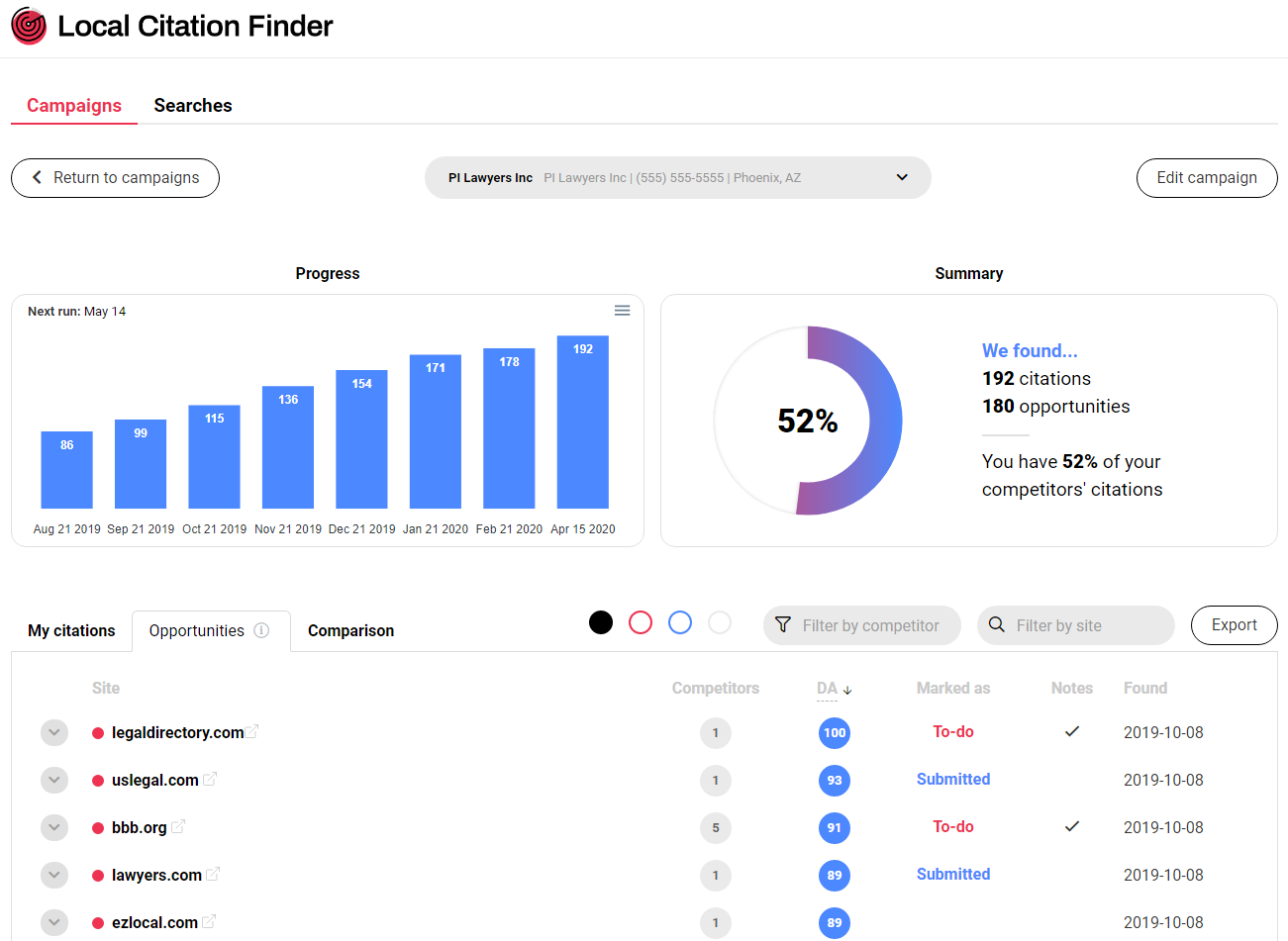
| Offers Local Citation Finder to help businesses track and build citations for improved search rankings. | Missing built-in integration with Podium for review management as seen in third-party roundups. |
 Google Business Profile Optimization Steps
Google ends up the low-friction pick if you run a spread of offices or shops and care more about cost than some gleaming analytics suite. Managing your business on Google costs nothing. No new platform bills lurking under the rug. Owners see search clicks and customer actions for free. That flips the script compared to most paid local SEO dashboards, which start stacking charges fast—add five, ten, twenty locations and the bill mushrooms (at least usually).

But line it up next to something like alternative options Local, and you spot the swap. But try wrangling dozens of locations—suddenly you’re buried under manual checklists and missing bulk reporting that bigger tools just crank out. Google hands you the wheel. You go update your listing—a new address, changed hours, today’s phone number—and those go live for customers almost right away. Conversations can happen in minutes, not days. That’s you, not a script. There’s no dashboard lighting up with trends or building you a summary by region. Third-party tools bundle those perks—review management, audit reporting, the full operational wash-and-fold. That ease slides in at $129 per location each year. New invoice, every store. Individual owners can fly solo, spreading messages far and wide without ever reaching for a credit card.
Plug in, get found in local search, and don’t sweat balancing the books for access. For the local bakery, the bike shop, the dog groomer—anyone set on stretching every dollar—they’ll struggle to beat the reach and baseline engagement Google gives for nothing. Google’s biggest hook has always been the sheer reach. Zero recurring costs, but every mistake or missed comment? No hired help, no automation. If you’re okay pushing your own updates and responding without anyone in the middle, this makes sense. It’s the natural landing spot for any small business that wants to be Google-visible right away—no contracts, no monthly rates, just click and go. Triggered review responses and market analysis in one click—those go missing unless you buy extra tools or jump platforms. You own it all, but the minute you crave deeper insights or dialed-up automation, you’re budgeting for another service.
| ✓ Pros | ✗ Cons |
|---|---|
| Integrates with Google Analytics, allowing tracking of engagement and search performance metrics. | No built-in review management automation; users must respond to reviews manually for each location. |
| Listing enables businesses to appear in local search results, increasing reach to nearby customers. | Missing dedicated local SEO reporting features found in specialized tools like Google Search Console. |
| Google Business Profile is free to use for unlimited locations, with no monthly subscription fee. | |
| Supports posts and updates directly on the profile, letting businesses share offers or news instantly. |
Birdeye Review Management Tools
Birdeye cuts straight into the market with its dirt-cheap entry price. Some users hit that ceiling and feel the pinch, especially if their demands balloon as their business wakes up. The baseline AI automation comes in at about half the usual cost—most competitors make you pay double for that level. If you’re a freelancer, run a single shop, or have a small team, you can skate in and try out automation without sinking a pile of money right away. The basic plan covers quick fixes. Need a real audit, or want to dig into keyword research? That pushes you up to $39 per month. The price jumps, not creeps.
The AI features open up for anyone craving cheap ways to boost local search. Birdeye’s bottom tier doesn’t stay locked behind agency walls like other solutions Local does. But agencies running bigger account lists hit trouble. The daily cap on free actions clamps down hard. After a few clients, you realize you either pay up for the higher plans or hunt for a tool that lets you scale freebies. The platform doesn’t hook into central data lakes. That sticks out. Marketers and agencies who crave tight workflow handoffs or want direct feeds into analytics systems will find Birdeye’s integration box empty.

Free insights drop right into your lap if you keep things light. If you’re after one tool that does everything, or you need enterprise-grade data pipes, you’ll probably step outside this fence. For solo operators, small shops, or the curious, Birdeye’s stripped-down AI module lets you muscle into local SEO without swallowing steep SaaS bills. The second you chase more depth—bigger strategy moves, deeper client rosters, or richer data—the seams start to show. Limits look closer and sharper. Birdeye slots itself as the cheap gateway for simple use.
| ✓ Pros | ✗ Cons |
|---|---|
| Paige, the automated AI tool, boosts local rankings for $14 per month. | Advanced tools like site audits and keyword research require upgrading from free tier to the $39/mo plan. |
| Free tier allows 3 searches daily, suitable for small publishing needs. | Free tier’s 3 daily search cap may restrict larger agencies managing multiple clients. |
| Plan tiers start at $14/month, keeping entry costs low for local businesses. | No mention of integration with Google Search Console or Google Analytics in paid plans. |
 Synup Guide for Business Listings
The base price sits low enough for local shops to poke at some AI tricks right away. Synup won’t drain your wallet upfront. That door opens early here. But the free plan comes with a ceiling. You hit a daily search quota. Agencies race straight into that wall. The platform, as you stand in it for free, won’t fit if you juggle bulk. The subscription surge happens fast, and you can’t sidestep those fees if you’re running at a larger scale.
Stack Synup against names like Whitespark and Yext—here the stakes come clear. Synup’s method: don’t fuss with big-league enterprise tie-ins or drown users in manual citation clean-up. Instead, throw out the basics and a dash of automation for not much money (in practice). Whitespark still leans hard on heavy, hands-on citation labor. Yext has its tentacles in big-enterprise systems. Synup draws a sharp edge: it’ll give you free use, but the boundary’s obvious and tight, and its pitch is laser-aimed at owners with a single site or those who need a stable, steady search routine. Agencies hoping for a campaign autopilot, or data dumps with colored graphs? You’ll bump paywalls, then watch costs click up in your budget tracker. That means Synup ends up with a crowd: freelancers, solo businesses, people counting nickels and aiming for automation without complexity. It’s not built for groups wrangling a dozen dashboards every day. Some other tools throw open more gates—but you pay for that privilege from the jump, sometimes three or four times the Synup baseline.
You want lightweight automation for small to mid-sized jobs—you get a taste, but her full game is paywalled past the free tier. Solo players on predictable monthly cycles do fine here. You stick to your cap, the bill stays flat, the features make sense, and there’s less risk you wander outside the rules. But try running audits across fifteen locations, or handle multi-site franchise work? Expanding reporting or transparency for clients means choosing a costlier plan each time you need the ropes loosened. So: Synup plays well for lean teams trying to squeeze value from a threadbare budget using tactical automation, but the minute you need to scale, you hit that iron link—subscription tiers.
How common is this scenario? The Statista 2026 industry report has numbers, and they tilt the same way.

| ✓ Pros | ✗ Cons |
|---|---|
| Paige, the automated AI tool, helps boost local rankings for $14 per month. | Lowest subscription plan starts at $14 per month; no permanent free unlimited usage tier. |
| Includes free tools for keyword research and site audits on the $39 plan tier. | Free tier search cap at 3 daily may be insufficient for agencies or high-volume users. |
| Free tier allows 3 searches daily, useful for small-business content publishing. | Automated local SEO tools like Paige may require upgrading beyond free allowances for continuous usage. |
| Reporting features tied to paid plans; free tools limited to keyword research and site audits. |
Turning Strategy to Results: How to Act on Local SEO Insights
Some business owners scrape the theory off and chase what works, but the real gains come when you mix both — tactical moves piled atop what suits your shop. Directory wrangling matters most once you’ve checked your stage, your aim, your bank. You won’t find a magic checklist, no universal fix.
- Scan your whole web footprint. Look for broken directory entries.
- Claim every Google Business Profile you’ve got. Pick categories that aren’t random, that actually fit.
- If duplicate entries stick around like gum on your shoe, throw BrightLocal, comparable services Local, or Whitespark at the mess. Sometimes hand-cleaning just doesn’t cut it.
- Set up tools for reputation management. Automate review requests only where it won’t swamp your score with junk.
- When reviews start to stack — fire up monitoring dashboards. Spot trends, reply fast, don’t let patterns slip by.
Skill varies and not every customer base is young. Budget changes what you do. A solo shop with one set of keys gets the most lift by making sure every listing is claimed, then nudging customers for honest reviews. Use automated citation platforms, and build up review velocity — jog, don’t sprint, and remember to check the basics before you bother with bells and whistles. Find what limps, fix it first.
Forget seventeen shiny tricks — pick two solid tactics, grind on them quarter by quarter, measure, wait for pulse. Discovery isn’t a single target you hit and done, but the owners who keep iterating these steps, keep patching, keep tuning — it’s those folks who land on page one in 2026. Biggest wins come from focus, not flair. Once traction shows up, you can stack on more.
One step at a time — and the numbers follow.