
Why TikTok Advertising Is Exploding Right Now
Scroll down TikTok and you see it: ads in the feed, not just noise but real pitches for real products. TikTok eats up attention — not just teens zoning out, but thirty-year-olds on lunch break, moms with a minute in the car, everyone now twitching for that next clip. The algorithm hooks you hard, and that’s no secret. Marketers use TikTok ad campaigns as their launch pad to real revenue, not just empty likes. “Step-by-Step Guide to Setting Up a High-ROI TikTok Ad Campaign” isn’t just a mouthful; it’s the actual checklist teams swipe through when it’s go time.
No one craves empty metrics. Views for their own sake? Teams see right through it. Dollars spent have to boomerang back. That step-by-step process isn’t hand-holding; it’s survival mode. Most campaigns will burn through cash and leave you cold, but if you wire up high-ROI thinking from the start—break down every target, prune bad creative, throttle bids when they underperform—your ad budget mutates into a machine that grows itself month after month.
Peer-shot product demos draw eyes in a way slick billboards can’t copy. TikTok’s ad manager sits at the core of media plans now; if you blink, rivals slip in, their UGC already racking up sales. This guide isn’t theory: it hands you login walkthroughs, pixel setup, rat’s nest troubleshooting for broken analytics, everything boxed and labeled so you can move today, not next quarter. See how the numbers stack up? Statista’s 2026 TikTok ad overview charts the platform’s jump in branded clips and audience scale. You don’t wander for metrics here—this roadmap is tuned for one outcome: more money in, more money back.

- Full software account setup walkthrough for TikTok Ads Manager
- Step-by-step guide for integrating analytics tracking software
- Troubleshooting failed TikTok ad campaigns and error recovery
- In-depth A/B testing methodology for TikTok creative optimization
Understanding ROI in TikTok Advertising
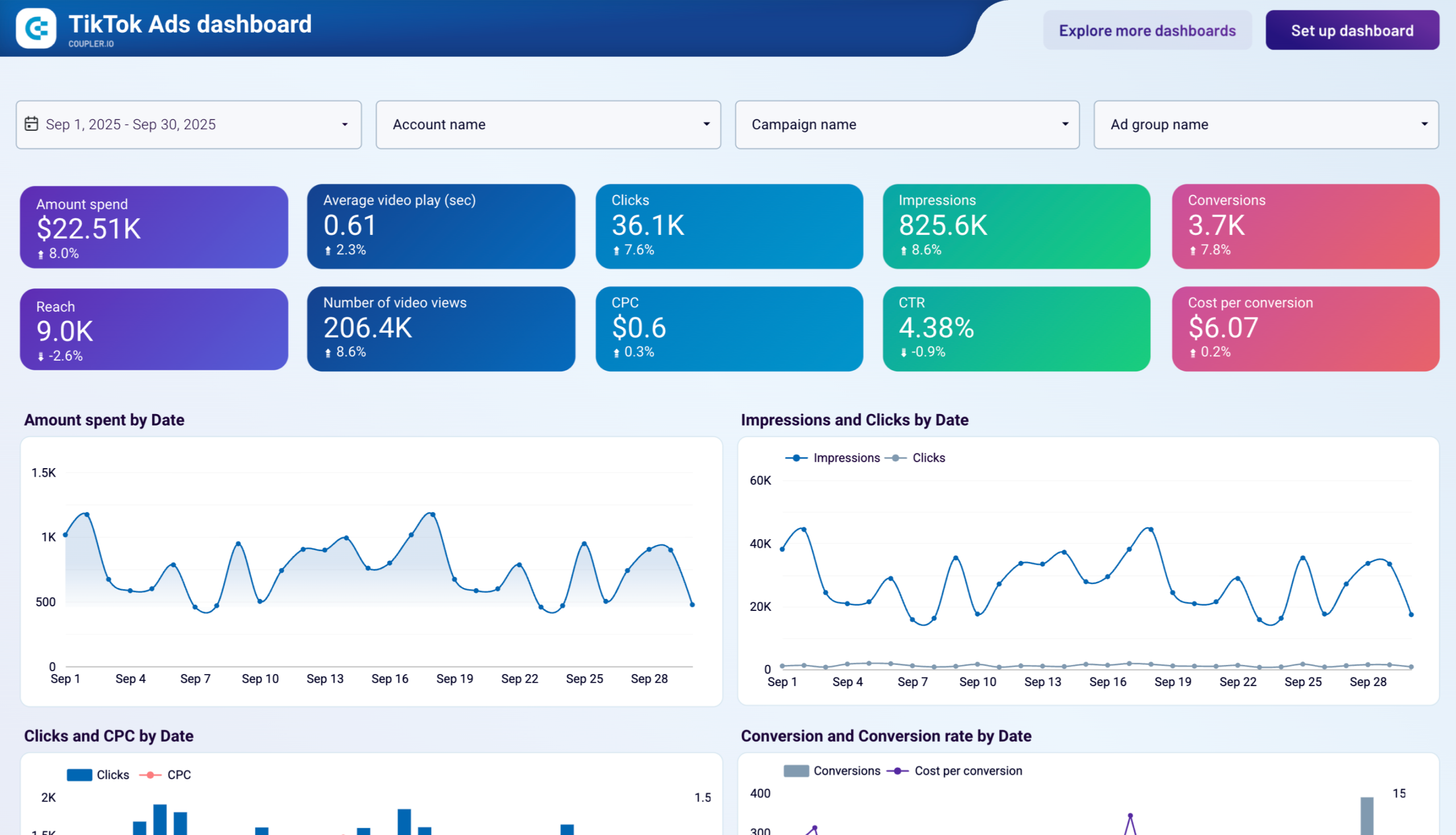
Did TikTok swallow your dollars and burp out real wins—signups, products gone, fresh installs stacking up in your dashboard? Brands sprint after these—maybe call them gold bars—but raw counts are shallow water, and TikTok is all undercurrents. Throw $100 into TikTok Ads Manager and expect an echo, not silence. If there’s no sign it worked, then your “ad budget” is just a receipt, no different from the snack run. Everyone worships CPA and CTR.
The real story starts under the surface, past just counting views (no matter how fat the number). You need a toolkit, stripped down and tuned to only TikTok:
- Click-Through Rate (CTR): Ad clicks, divided by impressions. Shows if you baited the right audience.
- Conversion Rate: Of those who clicked, who actually bit? Did they actually sign up or buy, or did they wander off uninterested?
- Cost Per Acquisition (CPA): Every dollar you lose (or hope to earn) by grabbing one real customer.
- Return On Ad Spend (ROAS): Cash back for every dollar you risked, minus TikTok’s cut.
- Video Completion Rate: How many survived your ad’s full runtime, not just the first three seconds?
No template saves everyone. An e-commerce squad glues its eyes to ROAS, squeezing out extra dollars per user, maybe eyeing average order value too. App teams (in plain terms)? They care less about how much one basket brings. Install rates rule their world, and CPI (cost-per-install) is their wound. Shops with thin budgets watch tiny metrics: CPA and brand lift, because every $10 gone is felt. High-ROI isn’t magic dust you sprinkle; it’s those relentless, sometimes grim choices—the ones you make in TikTok Ads Manager. Change your campaign’s goal, ditch half your audience targeting, scrap any ad format nobody bites.
They don’t stay inside TikTok’s tools. Data gets yanked out, mashed together inside Google Analytics 5, or tethered by TikTok’s own pixel, or moved anywhere that lets you slam campaign numbers against business returns. The feedback never stalls—one experiment, one wild test, a fresh video, another tweak. Double down if it works. Burn it down if it doesn’t. By 2026, short-form video churns — new trends rise, old tricks rot, nothing lasts a year. A campaign that killed in March might flop by May; TikTok spins that fast.
Welcome to TikTok Ads Manager: it throws a gauntlet of campaign goals at you first thing.
TikTok Ads Manager Account Setup Step-by-Step

- Traffic: Ads yank people from TikTok to your rickety store, or maybe just a single landing page.
- App Installs: Every buck gets clocked right to a download.
- Lead Generation: Email grabs in one tap, slick as a knife. Less friction means more leads.
- Sales Conversion: People buying—either inside TikTok’s sometimes weird retail box, or sent out to your own checkout page.
The penalty is brutal: wasted money, lost focus. Tracking slips (in most cases). Your ROI nosedives straight through the floor. Margin for error is a thread; there’s barely space for amateur mistakes. ROI hawks jam data flows together, automate syncs between tools, bolt platforms—campaigns become test kitchens with everything adjusted, nothing immune.
| TikTok Ad Metric | What It Measures | Impact on ROI |
|---|---|---|
| Click-Through Rate (CTR) | % who poke that ad’s button, not just look | High CTR proves the ad’s bait is sharp |
| Conversion Rate | % of clickers who buy, sign up, or drop info | Moves ROI upward, lifts every number |
| Cost Per Acquisition (CPA) | Cash spilled for each single customer | Tug the CPA down—profits look better |
| Return On Ad Spend (ROAS) | Earnings for every buck risked on TikTok | The one metric that means ROI |
| Video Completion Rate | % who watch with eyes open, no “Skip” | Proof your story lands—maybe ready to buy |
Numbers move fast and die fast; for a taste, check Statista’s digital advertising insights.
Try to track one, ignore the rest? They match numbers to goals, tie every experiment back to their actual bottom line, and learn the lesson the hard way, through lost cash and bad calls. The crowd still reading only surface stats? TikTok digests the slow ones.
Step 1: Set Campaign Objectives
- Pin down whether you want brand awareness, lead generation, sales growth, or app installs before spending a single cent. Without a razor-sharp goal, you’ll burn through ad spend with nothing to show for it.
- Name exactly who you want to reach: age, interests, location, or device. TikTok’s massive user base means getting specific isn’t optional for a high-ROI TikTok ad campaign.
- Decide what numbers count—impressions, clicks, sign-ups, purchases, or downloads. Choose one core metric so every dollar in your campaign knows its job.
- Before launch, grill yourself and your team: What does success look like in 30 days? Can creative stay consistent with brand values? What’s our realistic acquisition cost? Does TikTok fit our wider channel mix?
- Check that the campaign goal ladders up to your company’s revenue, retention, or market share targets. A flashy campaign that doesn’t shift core numbers will never justify its budget.
- Review earlier campaigns—TikTok or otherwise—for cost per action, retention, and creative fatigue. Dig for what moved the needle.
- Draw every step the prospect takes, from the first scroll to checkout or install. Tighten that path so fewer people drop off.
- Don’t guess—study your margins and customer lifetime value, then choose a spend that can generate statistically meaningful results without sinking your bottom line. Summer 2026’s targeting costs differ from last year’s numbers.
A step-by-step guide to setting up a high-ROI TikTok ad campaign always starts here: with clear, measurable objectives that reflect what your business actually needs to move forward. For official guidance and the latest proven methods, TikTok’s own ads manager documentation drops updated data for the 2026 playbook. Every win gets traced back to this checklist.
Step 2: Set Up Your TikTok Ads Account

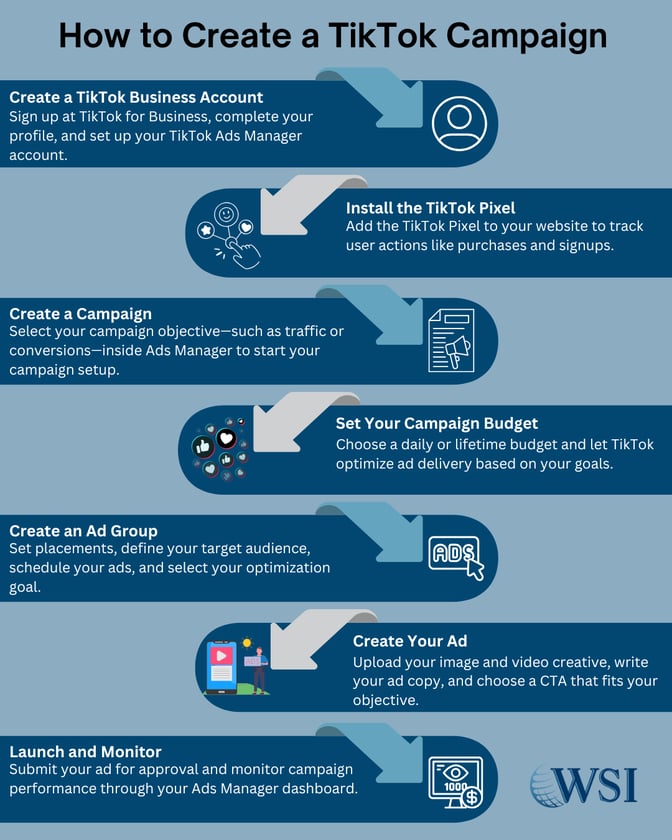
- Head to the official TikTok Ads Manager registration page and create an account using your business email. You can use a Google login, but a dedicated work address keeps data and billing clean for organizations.
- TikTok sends a verification link straight to your inbox—you have to click it to activate your account. Businesses must also confirm business info, so have your tax and company documentation handy for a rapid approval.
- Inside your profile, fill out your business name, address, industry, and time zone. Consistent details help prevent delays during verification or billing setup and make pulling correct ad reports easier when following a Step-by-Step Guide to Setting Up a High-ROI TikTok Ad Campaign.
- TikTok offers both manual and automatic billing options in 2026; link a major credit card or PayPal to start. The platform might require extra verification with your bank for large spenders—pre-approval avoids last-minute campaign stalls.
- For official business accounts, submit your company license, tax ID, or documents matching your registered name. TikTok’s compliance team reviews these within 48 hours in most cases, but missing details can add days.
- TikTok requires you to accept its latest ad policy and content guidelines before launching any campaign. Skim the restricted product list and creative standards—the wrong claim or image can trigger an account freeze before you spend a dollar.
- Link your site with TikTok Pixel or a third-party analytics partner—this step enables in-depth ROI reporting, conversion tracking, and remarketing. TikTok Pixel setup takes minutes but drives the most value if installed before your first ad runs.
- Review all the above, then hit “Submit for Review.” Human checks flag mismatched info, unverified emails, or unsupported business categories. Approval typically lands inside 48 hours, but you can check status in your account dashboard in real time.
- After account approval, revisit Pixel or analytics integration to test event tracking—run a test transaction or signup to ensure TikTok logs key actions. If your analytics dashboard stays at zero after launch, campaign optimization becomes impossible.
For deeper insight, consult TikTok’s official business guidelines and account setup FAQs, which cover special requirements for regulated industries in 2026. Each of these steps cements the backbone of a successful ad operation, reduces manual errors, and prevents costly shutdowns mid-flight. Tight account verification and strong analytics integration have moved from “nice-to-have” to mandatory for brands chasing repeatable, high-ROI outcomes on the platform.
Step 3: Audience Targeting & Creative Development

- Lock in the right age and demo block. Toss out the wide 13–60+ net. Who’s actually buying your product? TikTok’s controls let you set hard age edges. One age group will always bleed clicks with no sales—cut them before they drain your budget. Pick your buyer’s gender, pick the language they speak, slice the target map by city if it’s needed. Picture a vise—it won’t stop tightening until you see your customer staring back.
- Go past “interests,” hunt for real actions. Sure, you could list “home chefs.” But the real quarry is someone who just watched an hour of knife unboxing and meal-prep disasters. TikTok hides pools of in-app activity: who finished the clip, who clicked three links, who hammered the heart. Target what they actually did—not just what they listed—and you’ll see conversions start to prowl upward.
- Plug in custom lists and spin off lookalikes. Still got a list of last season’s buyers? Feed in the emails, TikTok IDs, or phones—strike again with precision. Slice out your top spenders or even those tiny one-off purchases, point the system at them, and build a lookalike army. TikTok’s AI will scent out new users moving like your best. Don’t sleep here; in 2026, brands at the top are all using this play first.
- Hit AEO—careful with your cash, though. Advanced Event Optimization is TikTok’s engine on overdrive. See a few signups or a couple checkouts? The algo starts tracking down those lookalikes by itself. Watch it: $100 can vanish before you can blink if you’re not paying attention. Start with a nibble, get a quick read. Sometimes AEO spits out results you’d frame—they might just as quickly bulldoze your daily spend for nothing.
- Pick your ad format. This isn’t a footnote—it can double your price. Maybe you “Spark” a creator’s video—borrow their surge, sit inside their heat. Or you drop an In-Feed Ad, trying to blend with the chaos of their everyday scroll. TopView just grabs the whole screen—first thing they see, big asking price, launch-day drama only. One tap and the user’s at your product page. Step back, check the route: the format moves the cost.
- First second: make or break. Cropped faces, hard jump-cuts, colors spiking out of nowhere. If you’re still winding up after two seconds, forget it—the user is already peeling past you. TikTokers burn through ten posts per micro-rush—only a split-second jolt makes their thumb freeze.
- Caption equals blade, not blather. Never start with “Quality outfits for everyone.” No one’s stopping for pudding. Go straight for the nerves: “50% off today only.” Or “100K sold in 2026.” Hit your limit: 100 characters. Grind it down till it stings.
- Say the CTA out loud—plus slap it in the text. “Shop Now.” “See Recipe.” “Play Free.” Don’t wait for the sign-off: get these live by the half, not after the credits. Double up in the caption too. It’s not overkill—you just want two cracks at breaking the scroll.
- Pass for a native—steal trend audio, swipe viral edits, mimic every cheat you can gather. Brands need to disappear into their feed. Quick-cut filters, duet boxes, big bold captions—these tricks stretch your time in the algorithm’s good graces. Lift last week’s top format and bend it out of shape just enough.
- Change one lever: opening shot, headline, offer, even how long it drags. TikTok’s built-in test function sheds friction. Early on you’ll spot the winner versus the dud—before you torch all your daily budget unnoticed.
Skip a targeting tweak and your ROI slips. Eyes open, every field checked—tiny settings swing the dollars. Grab the wrong age block, draw interest circles too wide—your project slumps in a puddle of pointless views, money burned, zero conversions surfaced up the funnel. These steps match any credible Step-by-Step Guide to Setting Up a High-ROI TikTok Ad Campaign.
Audience Targeting Strategies at a Glance
| Method | Level of Control | Typical Outcome (2026) | Best Use Case |
|---|---|---|---|
| Age/Geo Demographic Filters | High | Lower reach, higher ROAS | Precision/niche targeting |
| Interest Targeting | Medium | Moderate engagement | Big, broad retail options |
| Custom/Lookalike Audiences | Highest | Top conversion rates | Retargeting/expanding winners |
| Automated (AEO) | Low–Medium | Wild swings, scales fast | Early-stage tests, fat budgets |
Brands forked over $27 billion to TikTok ads in 2026. Not a single dollar fell through the cracks—rigid demo targeting, relentless testing, and a storm of new videos bloated those numbers. Statista’s market breakdown shows the surge in black and white. Set your targets loose and slap up generic footage? You’ll reap the exact scraps you handed out. Chase a dozen micro-shifts. There, in the details, the profit huddles.
Step 4: Budgeting & Bidding Strategies for TikTok Ads
- The number doesn’t have to be huge. Toss a ceiling on your TikTok spend before you run wild. Costs will stay in line—no random blowouts. Daily budgets act as the heartbeat; you nudge them up or down as you read fresh numbers.
- Say your promo is April 1st through 10th. Give TikTok one chunk of money for the stretch. It slices it up—quiet Mondays, spicy Fridays, no sweat. This style works best for launch weeks or big events, when you don’t want to babysit the numbers.
- If you pick auto, TikTok drives. It morphs your bids, chasing the best deal per click or signup, whatever you set as the prize. That’s gold if you’re new here, learning the ropes. Manual is for deep divers, people who tweak every cent, chase specific lead costs, break out cost-per-acquisition charts and start tussling with the actual math. Folks who crunch numbers switch to manual after seeing what their conversions really cost.
- Going after bargain clicks turns your money into smoke. Point TikTok to conversions—sign-ups, purchases, whatever your finish line looks like. Suddenly, the system hunts for real value, not just traffic drive-bys.
- Your dashboard becomes home base. Scan TikTok Ads Manager and keep tabs on ROAS every night, maybe with a snappy tracker. Move dollars from sleepy ad sets into the ones catching fire almost instantly. Wait too long—your shot vanishes.
- Manual bidders: set your cap, then check often. Not spending your whole budget? Cut the cap a bit, see if delivery drops. TikTok’s auction breathes—bids should flex, not ossify.
- Don’t just pour gallons into your campaign after one hot day. Let results stick for several days. Then, double your budget carefully and watch for weird spikes in costs. If you hit the throttle too quick, TikTok might scramble its learning phase and suddenly your clicks cost double.
Budget and bidding rules throttle your ad engine. Run with a careful pulse, and the dollars stretch further. Chase too many pricey viewers, and your return could nosedive. The year 2026: TikTok’s auto-bidding stays sharp for most, but operators in the weeds—power users tracking hard KPIs—end up tweaking manual bids, often outgunning the algorithm for extra wins.
| Setting Type | Daily Budget | Lifetime Budget | Auto Bidding | Manual Bidding |
|---|---|---|---|---|
| Use case | Ongoing optimization | Fixed-duration blasts | Beginners, speed | Advanced control |
| Spend Control | Daily cap enforced | Total campaign cap | Platform-improved spend | Max cost / CPA specified |
| Risk | Sudden surges possible | Burn-out risk if unchecked | Less hands-on | Requires constant review |
| Impact on ROI | Predictable but limited | Efficient for launches | Consistent results | More volatility, more upside |
One link for number crunchers. WordStream’s digital marketing budgeting research maps out the math for TikTok ad budgets in 2026. It’s straight fuel for building your Step-by-Step Guide to a High-ROI TikTok Ad Campaign.
Step 5: Monitor Performance & Improve for ROI
- This is your nerve center—locate the analytics dashboard within the TikTok Ads Manager to track ad campaign health and spot trends before they cost you. Every key metric lives here and refreshes in near real-time.
- A rising CTR hints your creative or targeting is catching eyes, while a drop signals creative fatigue or mismatched audiences. A consistent dip means something broke—don’t let it ride.
- High CPCs can erode margins fast; if you’re paying more than your target threshold, act quickly by testing narrower audiences or new placements. Low CPA equals efficiency—double down on what works.
- Getting views doesn’t pay bills—conversions do, whether that’s a sale, install, or signup. Improving conversion rate by just a point can swing ROI by double digits, so it belongs in every daily review.
- Run parallel versions of each ad—different videos, calls to action, or images—to see which wins out in your key metrics. Rapid, statistically meaningful tests beat the guesswork every time.
- Dive into segmentation: age, interest, location, and device. If a segment underperforms, adjust or exclude fast—tiny tweaks here often yield leaps in efficiency at the same budget.
- Increase spend on top performers and cut losses on laggards. Automated bids help with scale, but manual adjustments give you granular control as the data dictates where each dollar works hardest.
- Initial goals should evolve with market shifts in 2026. Use your initial ROI targets as reality checks, then review with each campaign cycle—don’t let benchmarks ossify as the market changes.
- Keep logs of tweaks to targeting, bids, and creative, tying every adjustment to resulting metric shifts. Pattern recognition emerges only when you document outcomes, not just hunches.
- Direct TikTok reports capture platform actions, but true attribution demands third-party analytics tie TikTok events to your broader funnel—web, app, CRM. This is how you chase full-funnel ROI, not just in-platform clicks.
| Metric/Action | What It Tracks | Optimization Levers | ROI Impact Level (Low/Med/High) |
|---|---|---|---|
| CTR (Click-Through Rate) | Creative resonance | Change visuals, CTAs | Medium |
| CPC (Cost Per Click) | Ad spend efficiency | Tweak targeting, placement | High |
| CPA (Cost Per Action) | Conversion efficiency | Refine funnel, creative | High |
| Conversion Rate | Effectiveness of landing/offer | A/B test post-click flow | High |
| Audience Segment Performance | Demographic/behavioral targeting | Exclude/expand segments | Medium |
| Bid Strategy | Cost control and scaling | Manual vs Automated bids | Medium |
Learning to combine dashboard vigilance with structured test-and-adapt discipline is what will keep your numbers rising while competitors plateau. Running through these steps turns a static campaign into a living, iteratively improving portfolio—what separates break-even dabbling from a disciplined Step-by-Step Guide to Setting Up a High-ROI TikTok Ad Campaign. For a closer look at metric definitions and up-to-date global ad performance benchmarks, see the source data from the Interactive Advertising Bureau’s 2026 Digital Ad Spend Report which sets industry context and helps calibrate your expectations to market reality.
Actionable Tips to Boost ROI on TikTok Ad Campaigns
- Use trending sounds and effects to boost engagement, aligning your video content with what’s already viral on TikTok’s For You feed. These native elements can push your brand into organic discovery cycles. TikTok’s algorithm rewards timely participation.
- Partner with micro and macro influencers whose audiences match your target demographics, but don’t just chase follower counts; insist on influencers who produce authentic, story-driven content that aligns with your product message. Trust transfers more than reach ever does.
- Vary video length — test six-second, 15-second, and even 60-second creatives across ad groups, tracking which format drives the deepest watch times and highest micro-conversions in your analytics dashboard. Optimization is math, not guesswork.
- Set up micro-conversions inside your analytics pipeline, capturing not just finished sales but smaller steps that signal buyer intent: clicks, saves, shares, and add-to-carts. These signals help you retrace what actually predicts higher-value actions down the funnel — the backbone of a true Step-by-Step Guide to Setting Up a High-ROI TikTok Ad Campaign.
- Schedule A/B tests at least weekly, rotating not just ad copy and visuals but also landing page variants, CTA wordings, and audience segments.
- Harvest and analyze real-time data with integrated analytics software like Google Analytics 5.0 or TikTok Pixel integrations, focusing on cost per unique reach and return per creative asset; reallocate budget aggressively toward top performers, not yesterday’s assumptions.
- Review TikTok’s official creative proven methods at least monthly, keeping your strategy aligned with newly-documented engagement drivers and evolving platform standards.
- Revisit audience targeting biweekly, pruning stale interest clusters and layering in new lookalike groups based on high-performing customer data segments.
- Periodically search for campaign errors — broken links, flagged creatives, unapproved formats — and launch preflight checklists before every campaign refresh to catch leaks that siphon off ROI.
Fine-tuned creative, granular analytics, and constant iteration are the anchors of every high-yield campaign. This is not a set-and-forget channel; optimization never ends.
Practical TikTok Ads FAQ For Beginners
Minimum Spend Requirements For TikTok Ads
You can’t run a TikTok campaign with just pocket change—they ask for $20 a day at the campaign level, and every ad group needs at least $5. A small brand in Delaware? You can get in the game. These limits let you poke at ideas without bleeding money. If you find a group pulling good numbers (say, a big spike on engagement from a Miami test), you can bump up the budget right there and see click volume jump. Keeping things too tight throttles growth, but cranking spend up in a solid group can really swing your numbers for the month.
Typical Approval Times For New Ads
There’s a catch—if it’s Q4, or you’re pitching around Lunar New Year, that clock might stretch to 36 hours. Otherwise, you’re sweating midnight, refreshing the dashboard, waiting for a green check. Usually, your ad makes it through TikTok review in under 24 hours. TikTok’s robots and human reviewers both scan for stuff: copyright tripwires, rule-benders, anything they think might get the company in trouble. Send creative two business days before your launch.
How Precise TikTok Ad Targeting Can Get
It’s sharper in 2026 because TikTok spent big on AI that can parse behaviors. You can competing platforms in on teenagers in Austin or mid-30s dads in Ontario—age, gender, down to zip code, interest, current hashtag, device. A car dealership can zero in on drivers searching “used SUVs” that week. Go too narrow, though, and your ads stall. The machine needs a crowd, not a closet, to figure out who will actually tap “Buy Now.”
Integrating Analytics Platforms With TikTok Ads
It’s grunt work—paste, check, then, after you update your site or swap a theme, check again because tracking can break without telling you. You’ll need either the official TikTok pixel (drop that code yourself) or pipe data into Google Analytics or AppsFlyer through their APIs. If setup’s off, you won’t see what happens after the click: no purchases, cart abandons, or real ROI data. Every campaign, every time, make sure tracking fires right.
Boosting ROI With Split Testing And Optimization
One ad, one headline, one target? Instead, you throw three versions into TikTok’s arena: swap slogans, try two different background tracks, test warm vs. Look at dashboards weekly—see what actually gets the thumb to stop, or which crowd watches to the end. The playbook for “Step-by-Step Guide to Setting Up a High-ROI TikTok Ad Campaign” is never a one-and-done trick. It’s a rolling process, swapping out losing pieces and tuning the winners. Skip that, and the algorithm outpaces you, burning budget while you watch.
Integrating Analytics Tracking Software With TikTok Ads
For the most up-to-date advertising guidelines, you’ll want the official TikTok Ads Help Center. It’s got current compliance threads and what other brands measure against—no guesswork, just the rules as of this morning.