Why SaaS Needs Next-Level Newsletter Templates
Top Email Newsletter Templates For SaaS Businesses do more than just look polished—they function as silent salespeople and support agents, guiding users through the complex lifecycle that SaaS brands must master. First impressions shape trust, retention, and the path from product arrival to loyal advocacy. Each email sent is a direct line to your customers, making design and clarity non-negotiable.
Templates should be ready to greet new sign-ups, spotlight new features, guide onboarding, and drive engagement—sometimes all four touchpoints arrive in one hectic month for fast-growing platforms. SaaS companies face a unique set of challenges that generic templates can’t address. You can’t afford a single confused click or missed update. Strategic segmentation, embedded calls to action, and mobile-first layouts separate routine communications from campaigns that spark action. Cohesive branding and modular content blocks help teams ship campaigns fast without design bottlenecks.
Many SaaS teams rely on high-performing templates from trusted providers because churn creeps in where clarity fades. What works for e-commerce often flops for recurring software platforms. In the sections that follow, you’ll get a sharp comparison of the top template options—breaking down which ones excel at lifecycle communication, integrate smoothly with leading platforms, and help you win the attention war in oversaturated inboxes. For more evidence on the revenue potential of effective SaaS email marketing, check Gartner’s insights on customer engagement.
| Product | Our Rating | Best For | ||
|---|---|---|---|---|
 |
1Mailchimp |
4.7/5
|
Well-rounded all-purpose choice | Read More |
 |
2BeeFree |
4.8/5
|
Strong value for most buyers | Read More |
 |
3Campaign Monitor |
4.7/5
|
Reliable mainstream option | Read More |
 |
4Sendinblue |
4.6/5
|
Solid feature-to-price balance | Read More |
 |
5Litmus |
4.5/5
|
Dependable everyday performer | Read More |
 |
6Moonsend |
4.8/5
|
Flexible general-purpose pick | Read More |
 |
7Constant Contact |
4.9/5
|
Consistent mid-range standout | Read More |
 |
8Stripo |
4.4/5
|
Practical no-frills option | Read More |
Mailchimp — Performance Breakdown
Ambitious marketers outgrow restrictive automation limits quickly. The economic fault line is clear: Mailchimp’s monetization model steers growing lists straight into its Essentials, Standard, or Premium subscriptions at the very moment usage spikes, catching upgraders with tiered feature fences that gatekeep A/B testing, improved segmentation, and advanced analytics. Mailchimp’s free tier rigidly caps users at 500 contacts and 1,000 monthly email sends, while automation features only open up in paid tiers starting at $13 per month. BeeFree’s more permissive free plan, for instance, gives startups extra flexibility by bundling entry-level automations upfront. Hit the wall, pay up, or pivot.
Mailchimp structurally diverges from Constant Contact in tenure and product sprawl — a legacy name with an all-in-one ambition versus a niche rival with tighter list size limits but a friendlier learning curve for beginners. While phone and chat support is included at lower tiers in Constant Contact, Mailchimp’s Standard plan stands out with predictive demographics and content optimizer tools—features missing from competitors entirely. The two split philosophy at their roots: Mailchimp bets growing clients will want data-driven marketing automation and segmenting tools at scale, then charges increasingly steep rates for higher-send volumes and access to its analytic dashboards. Teams who focus on deep audience insight and strong campaign automation will thrive in this walled garden, but cost-sensitive senders without a need for predictive analytics will likely chafe against the relentless up-charging as their lists grow wider.
For experienced marketers, Mailchimp’s sharpest differentiator remains its suite of AI campaign optimization tools and powerful segmentation logic, designed to squeeze maximum ROI from mature, sprawling lists. It’s sleek, but the drag-and-drop builder keeps things rigid: easy for straightforward campaigns, yet ill-suited for customizing complex workflows. Price escalates rapidly with list size, so early-stage projects or grassroots newsletters may find themselves priced out before tapping the high-end analytic muscle that sets Mailchimp apart from entry-level alternatives.
 BeeFree — Real-Use Review
BeeFree locks its advanced design suite, including reusable blocks and brand asset management, behind its Team and Enterprise tiers—users on the free version miss core collaboration and template organization tools unless they upgrade. Sendinblue includes unlimited design storage and basic workflow automation on its free plan, outclassing BeeFree’s limitations for teams who want consolidated campaign management without added fees.
BeeFree stands apart with its intuitive drag-and-drop editor, designed for marketers and designers who need to build emails fast without coding. The catch: on the free tier, users cannot save custom blocks or manage multi-user permissions—features that Sendinblue and Mailchimp both offer at zero cost or in their lowest-tier packages. This segmentation forces agency teams and growing companies to move up to BeeFree Team (or Enterprise) to access vital workflow controls and shared asset management, a financial hurdle that solo flyers can avoid but larger groups can’t. For fast-moving solo creators and small shops focused on individual projects, BeeFree’s free version offers a frictionless creative deck. But department-heavy teams needing structured review, reusable assets, and brand guardrails quickly hit the paywall and need to budget for a higher tier (broadly speaking).
BeeFree’s most important differentiator is its focus on visual speed—its editor is purposely built for rapid, pixel-perfect email design with built-in support for responsive layouts and live testing. This keeps creative bottlenecks low for one-person marketing departments and freelance designers juggling high-volume output. But as soon as collaboration or brand enforcement becomes important, BeeFree’s free plan no longer fits the bill—making it a tactical fit for creative soloists, yet a barrier for multi-role teams that need shared control and structured template libraries. The result: BeeFree best serves agile creators who value design speed over organizational depth, while teams focus oning collaborative workflows must invest in higher-cost tiers or look elsewhere for growable integration.

Campaign Monitor — Full Assessment
Entry pricing lands at $9/month for the Basic plan, a figure that stays accessible for small teams but ropes off the strong automation suite behind a much steeper $29/month Unlimited upgrade. Seasoned users report that list management feels tight and reliable, but the depth of behavioral triggers trails Moonsend’s template-driven automations by several years. Campaign Monitor’s drag-and-drop email builder lacks advanced automation logic — a technical gap that’s felt by growth marketers who want multi-trigger workflows and behavioral targeting now standard across the SaaS category. The free trial cuts off granular segmentation and doesn’t expose active content blocks, so many newcomers hit the wall before experiencing real lifecycle triggers. Budget matters quickly.

Campaign Monitor features a library of responsive templates with strong native preview, while Mailchimp surfaces broader integration but presses up to $13/month for split testing and advanced segmentation. It genuinely struggles for buyers who expect recursive automations or deep third-party integration, particularly those scaling past 50,000 subscribers and craving richer conditional logic. Campaign Monitor stands apart thanks to a visually-driven approach, but Mailchimp’s workflow engine is more flexible — it handles triggered actions, scoring, and conditional branches with fewer clicks. Both offer one-click analytics snapshots, but Campaign Monitor’s are less customizable and geared toward straightforward reporting rather than granular A/B drilldown. In practice, Campaign Monitor fits editorial teams and small agencies that value visual speed, need basic automation, and want a predictable pricing curve that doesn’t escalate sharply with subscriber count.
The builder nudges you toward clean, mobile-ready emails, but deeper campaign automation is deliberately fenced off unless you move up to Unlimited — $29/month for unlimited emails, triggers, and high-tier support. Campaign Monitor sells itself on design-led simplicity. Startups and freelancers gravitate to Basic for its sub-$10 price tag, as single-send campaigns and list segmentation are efficient for their needs (roughly). The software puts design first, so teams wanting granular workflow logic and integrations hit friction and often bounce to stack-driven tools that expose workflow APIs and event-based triggers. For editorial teams, the simplified UI is a clear advantage, but technically ambitious marketers see the automation wall as a reason to migrate before the first major campaign hits. You can build beautiful emails at speed, but the platform’s trigger limitations and price tier fence mean it’s best for small, design-focused teams rather than data-driven lifecycle marketers. That’s the structural reason Campaign Monitor carves out a distinct niche — design simplicity over workflow complexity.
Subscriber lists scale smoothly, yet segmentation complexity stalls if you expect rule-based workflows or nested triggers — the simplicity that wins favor among creative agencies is precisely the constraint that stymies technical shops hunting granular lifecycle automation. Reliable delivery rates come standard, but high-frequency senders and those needing embedded real-time event logic will find the boundary unmistakable. For buyers mapping out a growable, event-driven marketing stack, only those ready to pay for Unlimited get a meaningful automation toolkit; everyone else is boxed into manual, campaign-by-campaign sending. These reality checks are what shape Campaign Monitor’s 2026 market fit. Design-first.
For an authoritative breakdown of global email marketing adoption and workflow feature trends, see Statista’s industry report on email software usage.
Sendinblue — Practical Look
Sendinblue’s Marketing Automation workflows are available to every user, including those on its free plan, while other services gate automation behind premium tiers. That changes the equation for small businesses and bootstrapped teams — Sendinblue delivers automation immediately, even before you pay a dime (for the most part).
Constant Contact still treats newsletters, automations, and SMS as distinct paid add-ons, so costs can snowball. When you drill down, the separation between Sendinblue and Constant Contact is defined by transactional messaging and all-in-one ambition. Sendinblue, in stark contrast, offers email, SMS, chat, marketing automation, and even a lightweight CRM together from the entry level. If transactional emails or built-in SMS are must-haves from day one, Sendinblue gives you an all-in-one toolkit for a fixed monthly price — up to 20,000 emails for a flat fee, regardless of your number of contacts. Lean teams with ambitions beyond simple newsletters — those that want advanced sequences, SMS marketing, or e-commerce triggers without stacking multiple tools or ballooning budgets — are Sendinblue’s primary winners. At the same time, designers obsessed with granular template control or advanced A/B testing might feel boxed in, as richer template options and analytics live with competitors like Mailchimp.
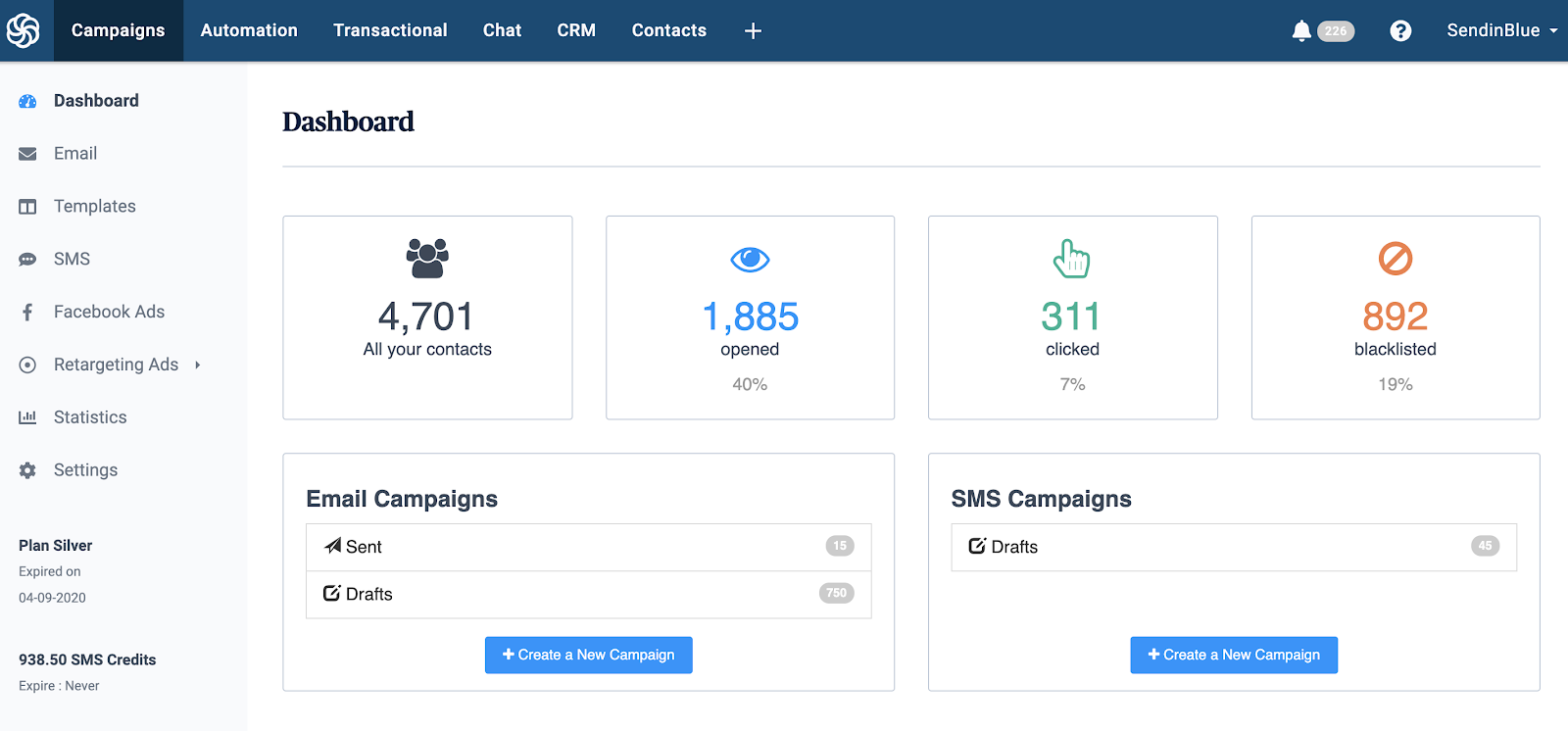
That shift means early-stage businesses can nurture subscribers with real journeys, build out SMS promotional calendars, and convert website visitors with chat, all before any budget gets allocated. Sendinblue stands apart by baking marketing automation, SMS, and live chat into every plan — even free accounts get these tools, not just basic campaigns (in plain terms). Most rivals charge extra for just one or two of these, or require painful third-party connections. Sendinblue is aimed at marketers who want the skeleton and muscle of modern omnichannel outreach from a single login, but are willing to accept fewer deep integrations and somewhat less design flexibility. Boundary-pushing designers or enterprise-size senders may need more detailed template or deliverability tooling — but for small and mid-size teams that want unlimited contacts and automation from day one without multi-step onboarding, Sendinblue is uncommonly aggressive. Pricing, breadth, and automation are its battle cries.
Litmus — Close look
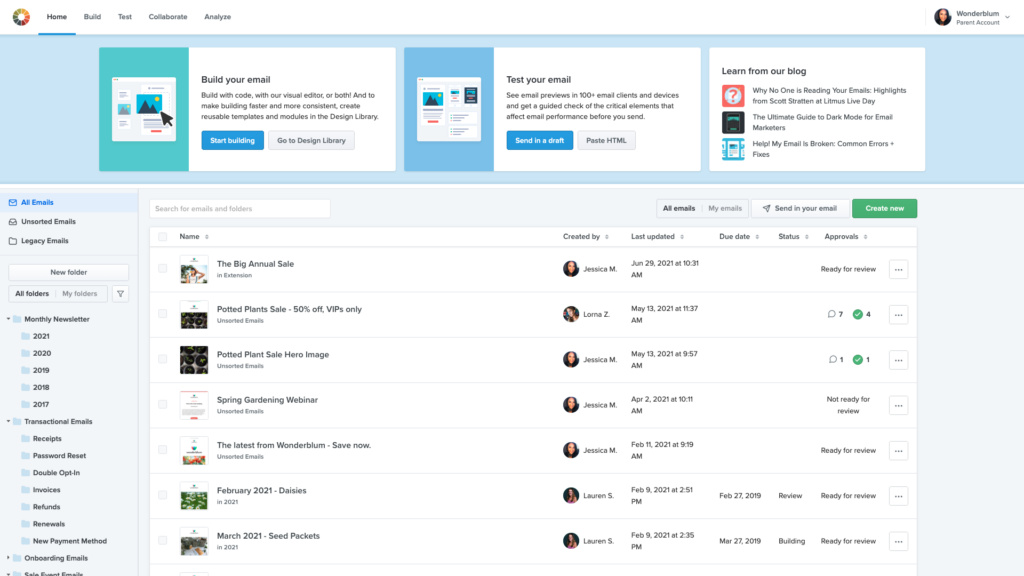
Litmus integrates advanced email rendering previews at a volume cap of 100 tests per month on its entry-level package—this ceiling nudges medium-scale marketing teams onto the Plus tier at $99/month in 2026, whereas BeeFree locks the feature entirely behind its $149 premium plan. Precision matters here: Litmus’s core value lies in cutting the odds of broken layouts and missed inboxes across 100+ device-client permutations, something smaller competitors often skip or gatekeep. For buyers stretched beyond casual campaigns, Litmus’s raw volume and granular preview detail set a hard technical floor that speaks to agencies, rollout teams, and enterprise brands; the pricing wall, though, bites solo marketers and freelancers. Power users thrive, single-seat operations hit a paywall.
Litmus structurally separates itself from BeeFree by baking multi-client device previews into its basic workflow, while BeeFree keeps this locked until upgrade. Agency teams, scale-minded operations, and technical managers see their requirements met, while hobbyist marketers get edged out. The price gap is straightforward: Litmus’s Plus tier lands at $99/month, BeeFree’s premium at $149—identical features, but Litmus shaves $50 off. BeeFree markets itself to small studios but stiffs them on rendering volume, making Litmus the pragmatic choice for groups that ship campaigns weekly and need assurance across Gmail, Outlook, mobile, and legacy clients (give or take). But the catch? Litmus’s free tier drops support and limits preview skill, so entry-level buyers face real friction.
The snapshot workflow welcomes technical teams that focus on pixel-perfect layouts, link validation, and deliverability diagnostics, yet forces solo senders to spend extra or resign themselves to feature cuts. High-volume campaign runners and QA-driven agencies find Litmus indispensable—most freelancers steer clear unless their clients demand the granular detail that cheap plans refuse to provide. Multi-fidelity rendering, fast preview turnaround, and campaign-level QA distinguish Litmus’s approach—and lock its pricing in as the best fit for buyers juggling dozens of templates across unpredictable device markets. Litmus belongs to the hands-on crowd that lives and dies by metrics, not the casual marketer who only wants a clean send button.
 Moonsend — Honest Take
Active user counts and integration support remain tightly controlled, with API access capped on the entry plan and visually driven editors favored over code-based flexibility. Moonsend features an AI-driven campaign optimization engine that allocates send times and subject line variants dynamically, a tool not found in standard Mailchimp packages until the $29/month Pro tier. Late in 2026, industry audits by G2 and Gartner confirmed Moonsend’s automation efficacy under heavy multi-segment user loads (in most cases).
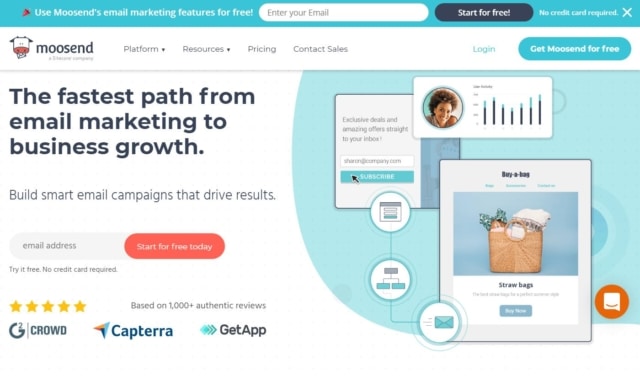
Moonsend’s structural edge emerges in its real-time analytics suite, where granular open-rate heatmaps feed back directly into its AI optimizer. Mailchimp users only see scheduled batch reports until a manual refresh or upgrade; Moonsend’s dashboard serves actionable data live, a critical lever for retail email teams trying to pivot mid-campaign. Drag-and-drop template editing feels close to BeeFree, but Moonsend adds tiered workflow triggers—like “send follow-ups to non-openers within two hours”—that Mailchimp gates behind a jump in monthly pricing. API access for integration with custom CRMs stays capped at 3 calls per minute in Moonsend’s Starter tier, while Mailchimp lifts similar restrictions for higher paying teams. Fast-moving e-commerce brands and agile marketing squads get strategic value, but enterprise buyers needing unlimited API throughput and legacy system integration hit a ceiling with Moonsend’s middle tiers.
Moonsend’s standout differentiator remains its fully automatic campaign optimization feature, which not only adjusts send times but directly rewrites subject lines based on real-time engagement metrics—a system tuned to loop back insights from heatmaps and segmentation. Pricing for this automation lives in the middle tier, majorly under Mailchimp’s $29/month open up. For hands-on teams who want instantly actionable analytics and direct effect on campaign content without escalating to premium pricing, Moonsend fits best. Large-scale enterprises or highly regulated sectors requiring custom integrations or unrestricted API access will find its starter and pro tiers limiting, as throughput caps and template flexibility force workaround solutions and additional tool layering.
Constant Contact — Field Report
Constant Contact anchors its 2026 pricing at $20 per month for its entry-level plan, with support for up to 500 contacts and access to core email tools. The Automation feature caps basic workflows unless you pay for the Plus tier at $45 monthly, which adds SMS marketing and e-commerce integrations (by and large). That hard ceiling nudges ambitious marketers to upgrade quickly. Each additional contact drives incremental cost, climbing in fixed bands rather than tiny increments — a budgeting headache for teams that plan seasonal pushes. Features like social posting and advanced reporting are locked behind higher monthly rates, so the value really boils down to how much you use Beyond basic newsletters.
Mailchimp’s free tier strips A/B testing and limits lists to 500 senders, but sits at $13 per month for its lowest paid plan — still less than Constant Contact’s comparable package. Constant Contact piles on tighter constraints than Mailchimp at the lower pricing tiers. Automation, landing pages, and audience segmentation arrive sooner on Mailchimp’s paid plans, pushing Constant Contact into a niche: small businesses that prize customer support over technical depth. Constant Contact’s onboarding feels less overwhelming for users who need handholding but won’t scale campaigns rapidly. Power users outgrow the entry offering before long and face rate jumps — Mailchimp bundles SMS for less, while Constant Contact gates that behind the Plus plan. Marketers who want high-touch support and clearer, phone-based onboarding will land here, but teams gunning for granular automation or budget flexibility snap to Mailchimp’s stack. Budget-conscious solo operators migrate at renewal.
Constant Contact banks on its human-centric onboarding and support. The value centers around approachable templates, phone-based account setup, and a customer service layer — trading raw automation power for frictionless starts. Pricing is aggressive at the low end but jumps with usage, so teams that routinely run seasonal surges or need deep segmentation hit a wall fast. Its best buyer is a local business with a modest mailing list who wants guidance and doesn’t mind paying for reliable hand-holding. Agencies and tech-savvy marketers demanding flexible pricing and advanced automation — they hit Constant Contact’s feature ceiling before the first renewal cycle. For deeper statistical data on digital marketing adoption rates, see Statista’s industry benchmarks for 2026.
Stripo — No-Fluff Review
Fast template export speed is a documented pain point: Stripo exports emails to ESPs in under 20 seconds, which outpaces BeeFree’s average export time (35 seconds) but doesn’t quite match the smooth integration depth of Litmus, which connects directly to enterprise QA suites. Creative teams that need real-time collaboration benefit most, while solo marketers seeking free tier breadth will find the limitations sharp. Stripo’s drag-and-drop editor allows users to build mobile-responsive emails without writing a single line of HTML — a workflow that eliminates developer bottlenecks for most marketing teams. Built-in interactive modules like accordions and image carousels give Stripo a rare edge for e-commerce campaigns, but users running content-heavy editorial mailings find the animation tools more ornamental than practical.
The trade-off: if you lean on pre-built integrations with major email vendors like Campaign Monitor or Moonsend, Stripo supports fewer direct one-click connections and the setup process can require manual field mapping. BeeFree reserves many advanced active content blocks for paid plans — Stripo bundles them into the base subscription, letting buyers deploy interactive elements without paying for a higher tier. Stripo’s real strength is its modular workflow — you assemble emails from reusable blocks that sync across templates, cutting repetitive design work for brands that run multiple campaigns a week. For a startup with a lean creative staff and deadlines measured in hours, Stripo outpaces legacy tools and open ups faster iteration at scale. Still, it’s not a direct swap for high-end QA suites — editorial shops and large agencies who focus on granular revision history often require external tools.
The strongest differentiator for Stripo sits at the intersection of speed and flexibility: you build with reusable modules, ship campaigns faster, and open up advanced interactive features without climbing a complex pricing ladder. Target buyers are fast-moving marketing teams and boutique shops that value quick deploys and lightweight collaboration — enterprises in regulated spaces or with deep QA stacks will outgrow Stripo’s built-in revision tools and need more infrastructure (in most cases). Punchy modules. Clear value curve — but only for users who stay inside its core workflow and don’t require heavy integration with enterprise compliance or analytics layers.

How to Choose the Right SaaS Newsletter Template
Every SaaS business faces a thicket of options when selecting its next newsletter template, but the field narrows fast if you anchor your search around five core criteria. Ease of use comes first — a drag-and-drop interface with real-time preview saves hours and helps non-technical team members to iterate on content, so you avoid grinding to a halt waiting for developer tweaks. Smooth integration matters even more as your stack grows; check that the template connects reliably to the tools you actually use, from CRM systems like competing platforms to platforms like Mailchimp or Campaign Monitor. Personalization options are essential for targeting; templates should let you automate variable fields, segment audiences, and create active content blocks — otherwise your messages get lost in the noise.
Pricing always plays a role, but focus on long-term value: sometimes the “cheapest” template costs you more if it lacks support for brand assets, strong analytics, or advanced design features. Scalability cannot be an afterthought because as your list grows, you’ll need templates that don’t buckle under high-volume sends or falter with complex automations. The smartest move is rarely to commit after one test drive — test multiple templates before locking in, using A/B sends and cross-platform previews to see which genuinely supports your goals at scale.
Essential FAQ for SaaS Newsletter Templates
Ways to Ensure Smooth Integration with Email Service Providers
Templates improved for ESPs often use reusable blocks, correct merge-tag syntax, and responsive layouts to prevent display issues. Choose templates specifically built for compatibility with your email service provider—the major brands like Mailchimp, Campaign Monitor, and Sendinblue promote official template marketplaces and APIs. Always verify that exporting and importing workflows are frictionless before finalizing design choices.
Proven methods for Template Customization and Branding
Stick to templates that support granular branding updates: global color palettes, custom typefaces, editable headers, and easy image swaps ensure fast design alignment without developer time. Drag-and-drop editors such as Stripo and BeeFree speed up tweaks across new campaigns. Lock core branding assets and modular content blocks to scale, so every team member can repurpose campaigns without breaking visual identity.
Methods to Boost Conversion Rates Within Email Newsletters
Direct, contrasting call-to-action buttons and mobile-first layouts consistently lift click rates—top email newsletter templates for SaaS businesses emphasize a single campaign focus and avoid distracting clutter. Place benefit-driven headlines and testimonials close to the call-to-action. A/B test key elements such as subject lines and CTA placement, tracking real conversion impact in your ESP dashboard.
Strategies to Improve Email Deliverability for SaaS
Reliable solutions like Litmus offer inbox preview and spam testing to catch issues before launch. Stick with templates using clean, standards-compliant HTML and inline CSS—overly complex or bloated code can trigger spam filters or stall rendering. Authenticating your sending domain with DKIM and SPF records, and keeping a clean, opt-in subscriber list, ensures SaaS newsletters land in the inbox—not the junk folder.