In 2026, this matters more. CPC can flip your Meta Ads from profitable to cash-burn overnight. If you don’t track your Cost Per Click, you’re opening the door for waste. Meta Ads isn’t just one site—it rules Facebook, Instagram, Messenger, and Audience Network, blanketing hundreds of millions of users with sponsored stuff. But the wrong CPC and your daily budget evaporates before lunch. You lose the room to test, you lose volume, you lose control. A dollar shaved from CPC does more than you think. That’s data to feed your next round of creative. Even BigCo with six-figure budgets can tank ROI if the cost per click mushrooms unchecked.
One tap, one charge—CPC is the meter ticking every time someone lands on your ad. It does NOT hide in a sea of “miscellaneous fees.” High CPC is a leaky faucet in your ad spend, sometimes draining the whole sink (in plain terms). Drop it, and you don’t just save pennies by trimming some bland headlines. True CPC reduction hangs on four hooks: sharp audience targeting, relentless creative iteration, real-time campaign tweaks, and landing pages that don’t chase prospects away. Here’s the kicker—Meta’s algorithm will actually drop your CPC if users can’t stop reacting to your stuff. But you have to earn it with relevance and speed.
Three things you’ll pick up here: tactics that real advertisers used to move the needle, concrete 2026 ad benchmarks, and competitor breakdowns that don’t pull punches. You want a step-by-step walk-through? Underrated moves that few teams bother with? Scissors for slashing wasted spend. If you get these pieces right, you won’t just get cheaper traffic—you’ll see campaign returns climb, and hit scale without chaos. In Meta’s world, you don’t get to ignore CPC or kick it down the road. If your strategy can’t master this cost, your digital growth stalls before it starts.
The main points
Practical examples of ad creative testing for lower CPC
Comparison between different bidding strategies in Meta Ads
Step-by-step walkthrough for tracking CPC effectively
Common pitfalls that increase CPC and how to avoid them
✅
Fact-Checked
Editorial Review
🧠
Expert Analysis
Sourced & Cited
🗓️
Updated 2026
Current & Accurate
Meta Ads CPC: Key Factors Overview
Swap a headline or flip a bid setting—your cost per click might lurch up by $2 in 2026, not just a lazy $0.12 nudge. Every tweak to your Meta Ads actually shifts what you pay, whether you meant it or not. Veterans map out the battlefield first; they don’t poke buttons hoping for luck. If you “improve everything,” you actually improve nothing.
I’m talking clear trade-offs you can pull now. Most of what really chews through your CPCs is here. A hidden toll collects when creative fatigue sets in; let last quarter’s image linger just a week past its expiration, and Meta quietly dings your CPC. Messy targeting? That’s just pouring money into the snow. The algorithm’s gotten moody since 2024: relevance score now twists your CPC hard and fast. Ignore it, and in a day the cost chart draws a hockey stick you didn’t want.
Bring this breakdown with you when you tune campaigns next time. The table isn’t the oracle—it’s just what actually jams your cost up or slices it clean. Don’t hunt phantoms: usually, a single weak spot won’t sink performance. But line up two or three high-impact changes and watch cost per click drop off a ledge. That’s the edge everyone chases but few keep.
Factor
Impact on CPC
Suggested Optimization Action
Ad Creative Quality
High
Cycle new formats and swap tired assets
Audience Targeting
High
Sharpen interests, mine lookalikes, cut waste
Bid Strategy
Medium
Flip between manual and automatic bidding
Ad Placement
Medium
Open fire, then diagnose your flops
Relevance Score
High
Tighten copy—wake up your visuals
Landing Page Speed
Medium
Cut load times or grab a stripped-down template
Campaign Budget Size
Low
Size your budget for the crowd, not the hope
Notice those three “high” warnings. Ad creative, targeting, relevance—these steer your dollar, not the stuff at the table’s tail. Creative refresh isn’t a luxury budget teams want to cut. Landing page speed is just triage; slow sites kill click price and patience in seven seconds. But here’s the trick: keep scanning engagement and relevance metrics—Meta’s docs harp on relentless testing (Meta Business Help Center). If you want CPC down and reach up, you have to push both the technical details and the creative roulette, often in the same hour.
Step 1: Improve Ad Relevance and Quality Score
Your Meta Ads are bleeding money. Meta’s auction never hides its hand—it plays favorites with ads that actually click with people. You get the cheap seats (by and large). Your Cost Per Click sinks. Keep that score high—watch your discounts pile up.
All tucked inside Meta Ads Manager, staring back at you. Three gears grind behind this machine: Ad Relevance Diagnostics, expected CTR, ad quality. Here’s how it happens: user scrolls, your ad flashes, and Meta’s invisible judge scribbles down its bet—will someone actually tap? Then it peeks at your competition. If your message stumbles, or your targeting flies in random directions, or your graphics are stale, the algorithm leans in and demands more money. Sometimes, it barely lets your ad breathe at all. Fewer eyes, bigger bill (broadly speaking).
It’s busy work, a spinning wheel—every tweak to creative, every shift in audience, every fresh sentence is a push on that wheel. Climbing the score ladder isn’t a single jump. The best in the business? They’re knee-deep in campaigns, making moves every week. No magic button. Just layers of gritty routine.
Actionable Strategies for Higher Ad Relevance
Pull open Ad Relevance Diagnostics in Meta Ads Manager. Spot the drain: does Quality, Engagement, or CTR always lag “Below Average”?
Carve up your custom audiences by intent. Split-test straight product pitches for retargeted “add-to-cart” folks, then try testimonials on the stone-cold crowd and measure who dreams bigger clicks.
Flip out old images or videos every 14 days. Hammer the “Best Performing” filter. If something can’t beat a 2% CTR, cut it loose.
Steal words and pictures from your landing page. Mirror them inside your ad. This kind of copycatting wakes up your quality score and gets people to actually look around after the click.
Lean on Active Creative—feed Meta five headlines, three body blurbs, and a pile of images. See what spikes in Creative Reporting, then shove cash behind the outliers.
Five plays, again and again, build your backbone for campaign growth.
Measuring and Improving Quality Score
Numbers don’t fudge the truth. Every tweak ties straight back to your dashboard. Scan the “Delivery” column in Meta Ads Manager—watch an ad climb from “Below Average” to “Above Average” on all three fronts. Sometimes, CPC falls 10-30% in a single sprint. Twice a week: that’s the minimum for checking these ranks next to CTR and conversions.
The official word shifts every so often. Guesses don’t run campaigns—tracking does. Catch the latest in Meta’s Ad Relevance Diagnostics guide for the newest meaning of those ranks in 2026. Payoff isn’t just what you save today. Wins build up—next month’s spend travels further (in plain terms). That’s the long play: learning to drag your CPC down starts and ends with relentless pressure on relevance and quality score. Keep tracking, keep cutting, scale only what actually lives.
Step 2: Refine Audience Targeting
Instead of chasing vanity metrics, focus on attracting those who click with purpose. Sharpening your audience targeting calibrates your Meta Ads to reach users most likely to value what you offer. Lowering wasted impressions drops your Cost Per Click fast.
Broad targeting chews through budgets, showing your ads to casual scrollers and off-market browsers—audiences who rarely convert and drive CPC up. Grain size matters in 2026. The trick is narrowing your focus until Meta’s algorithm finds users who match your real buyers’ behavior, not just their profile traits.
By uploading your purchase list, site visitor logs, or app user IDs, you ask Meta to show ads only to people who have interacted with your brand. Start with Custom Audiences, built from your existing customer data. The engine recognizes this trail and moves your ads higher in their feed—a recognition effect. You cut spending on cold audiences who’d scroll right past.
Extend reach with Lookalike Audiences. Here, Meta finds users whose digital footprint—their browsing, liking, and buying patterns—mirror the people on your best customer list. Start with a narrow similarity (1%) so your campaign laser-targets the closest behavioral matches. Scaling up further—2%, 5%—expands reach but also waters down quality, and that creeps up CPC.
Remove past buyers so you don’t pay to pitch someone who already converted (by and large). Ax users who bounced after viewing your landing page for two seconds; they’re tire-kickers. By stripping away these low-propensity segments, you avoid auctioning for clicks that never turn into sales, pulling your cost down.
What Is CPC and How Is It Calculated in Meta Ads?
Demographic filters are the last lever. When you tighten these filters, your ad budget goes further—fewer, better-targeted auctions means a lower average CPC. Set your age range, gender, and even relationship status if relevant. Drill down on location to neighborhoods, postal codes, or specific cities. If your service appeals mainly to 25-34s in Manchester, don’t splatter impressions on everyone in England.
Combine Custom Audiences, Lookalikes, and exclusion techniques for compounding effect. Don’t rely on a single strategy. Monitor your audience overlap regularly, because Meta’s weekly updates might toss users from one pool to another, shifting your results. Cross-check your campaign’s Audience Insights to spot wasted segments and recalibrate fast.
Every optimization loop ties back to the same outcome: relevant audiences drive up engagement, and that signals Meta’s algorithm to reward you with lower CPC. Continually test, reviewing both statistical scale (enough impressions for meaningful trends) and narrowness (no waste on out-of-market segments). That’s how high-performing teams keep their Cost Per Click (CPC) on Meta Ads lower than the competition—audience refinement is the lever many ignore, but the ones who master it thrive. For detailed audience targeting methods, the official Meta Business Help Center covers advanced segmentation features in depth.
Step 3: Test and Iterate Your Ad Creatives
That’s a ticking bomb for your relevance score. Watch as your cost per click leaps past $3 by mid-2026—a slow bleed, if you miss it. Meta’s ad machine likes results. It holds a silent scoreboard, tracking who clicks and who yawns. When your ad flops, Meta steps on the brakes. Swap just one thing—a photo, a headline, that blue “Learn More” button—and suddenly your $1.70 CPC crumples below $1.20.
A/B testing isn’t just a neat trick. It’s the main tool for cheaper clicks. You want the roadmap, not hunches? Here:
Fire up at least two ad versions. Change one thing at a time—maybe just the image, the headline, the text, or only the CTA.
Let each run its course—aim for 3-5 days, or until every variant racks up 1,000 impressions. Below that, you’ve just tossed a coin.
Repeat with the winner—take what worked, nudge something else.
To gut your CPC, run through every format: single image for speed, carousel if you’ve got story to tell, video for attention (just watch the bill), slideshows for those stuck in-between, and DCO when you want the algorithm to assemble a Frankenstein. Trends will tempt you, but fashion doesn’t slash cost. Videos slice through boredom, but budgets groan under production fees. Click magnets—if every card earns its place. Pick just two formats per campaign if you crave clear reads—muddied waters don’t help your budget.
Take your cues from data, always. Meta’s dashboard is a hard truth mirror:
If you see 1.5% on cold traffic, you’ve hit a serviceable floor.
Ignore the old name, “Ad Quality Ranking” is here in 2026. Stay above “average” or pay the penalty.
Frequency tells another story—once the same eyes see your ad too often, they tune out. Don’t wait until your CTR nosedives to rotate in new creatives.
This is not tossing darts blindfolded. If you stop, someone else will sink your campaign and rake in the savings. Twice a day, check your numbers—hunt out the unexpected spike or the slow crawl. Save your notes—trends evaporate, and what sings in March falls flat come June. Season shifts; audiences wander; fatigue settles like dust. Relentless tinkering is your life raft to keep CPC sane on Meta Ads.
Benchmarking: What’s a Good CPC for Meta Ads?
Meta spells it out in its creative proven methods: don’t just trust the system—run a conveyor belt of fresh ideas, keep results steady, and dodge those algorithm shakes. Forget to test, and next month’s invoices sting. If Meta’s tools flash a warning—change format, refresh creative—heed it or budgets burn. In 2026, constant testing isn’t a nice-to-have.
Step 4: Choose the Right Bid Strategies
Meta Ads 2026 piles on a stack of bid strategies. These tools can yank your CPC up or down by whole dollars—no granularity here. You have to pick with care. The machine’s incentives shape your results, so match them to your goals. “Lowest Cost” is where most people land. There’s also bid caps, target cost, and cost caps—each one swings your budget and traffic in its own direction.
It scours for the cheapest clicks, hammering your spend down, but letting quality wobble. Lowest cost turns Meta into a bargain hunter. A strict bid cap slaps a hard roof on your click price. Great for keeping CPA locked, but you can lose volume if you set the cap too low. If competitors outbid you, your reach shrinks in real time. Target cost bidding asks Meta to balance out your CPC over the campaign, ironing out those wild spikes. Sometimes, that throttles your ad delivery.
Someone who always chooses a single method can end up draining spend—missing out when costs shift or scale appears. If you want to actually drop your Cost Per Click (CPC) in Meta Ads, you need to experiment. Results swing, so strategies should swing with them. Lowest cost works for flood-the-zone traffic, bid caps suit tight budgets, and target cost fits a steady, margin-first approach. There isn’t a universal winner. You have to find the strategy your risk tolerance can live with.
Pull both bid and delivery reports. Marketers scaling hard with razor-thin targets comb through this data every week, and shift their bids if they update audiences or drop new creatives. Watch your campaign from Meta’s Ads Manager. Don’t just check CPC—scan your impression share, pacing, delivery diagnostics. Last May, a big budget spike pushed CPC for one client up by $1.85 in two days. That meant competition ramped and Meta started spending quicker. You need to tweak the bid cap or switch up strategies. Keep a performance journal—log every change.
That avoids choking your campaign.
When testing target cost, start above your average CPC—cut it steadily, making Meta hunt for better deals.
Every quarter, run a “Lowest Cost” vs “Cost Cap” comparison. Try these moves:
Set your first bid caps just below the current average CPC, then nudge them up or down every 48 hours. Throw cost curves and volatility into a spreadsheet and chase real patterns; don’t just eyeball.
Proven Strategies to Lower Your CPC
For nuts-and-bolts detail, Meta’s official documentation lays out changes and auction quirks—see their guide on bid strategies. Read it before you launch anything new, because they tweak mechanics with zero warning. The biggest wins come from treating your bidding strategy as a ladder, not a setting you pick once and forget. Move, track, adjust. If you revisit, retest, and tinker, CPC drops and ROI can surge—even when the sector gets jumpy.
Step 5: Monitor and Adjust Campaign Performance
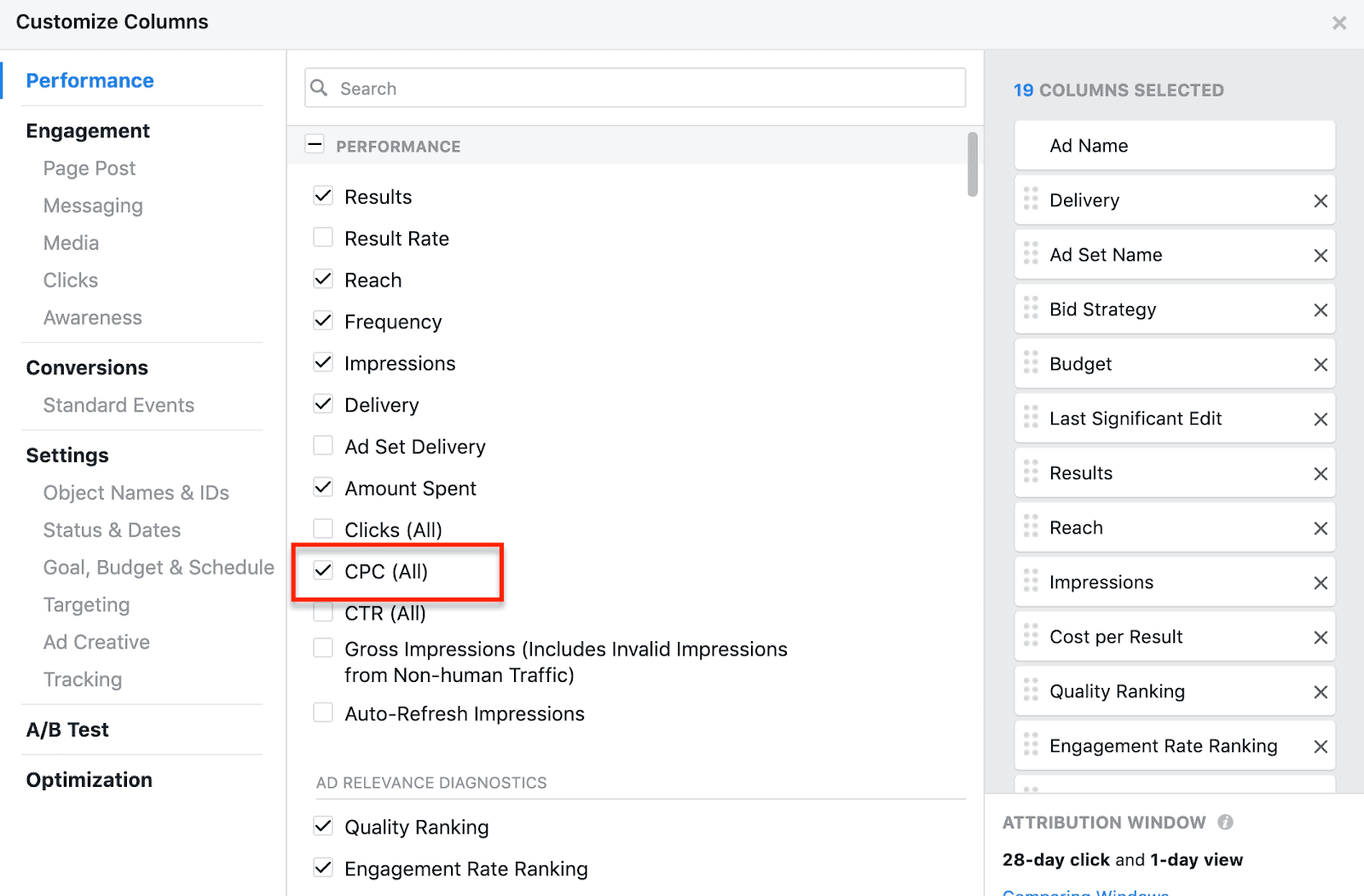
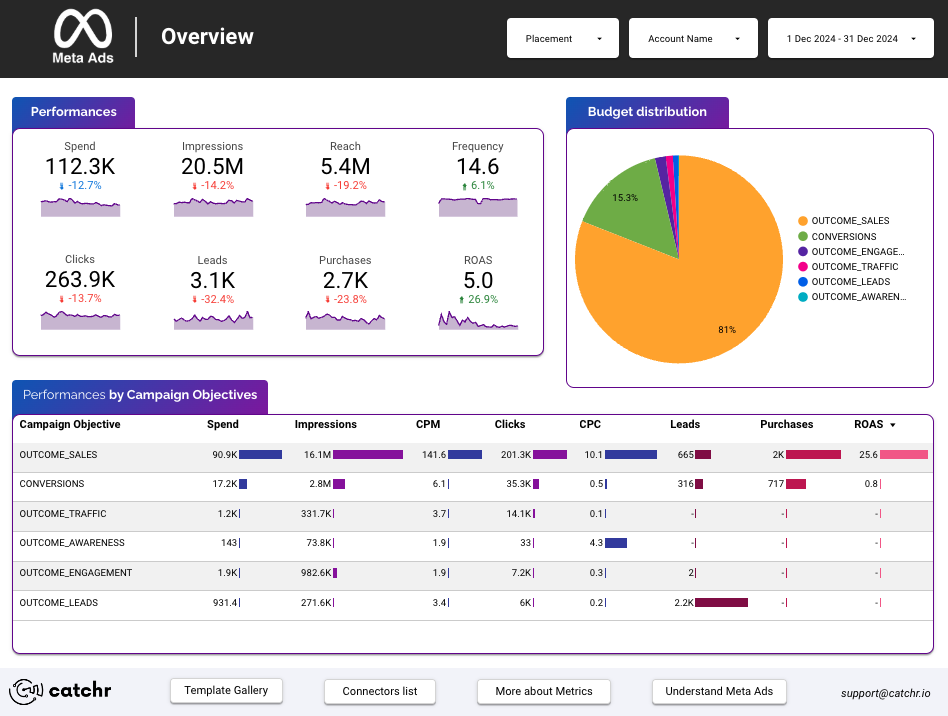
Stagnant campaigns bleed money while smart marketers watch the numbers like a hawk. That kind of granularity is where profits are made or erased. Inside Meta Ads Manager, the “Columns: Performance and Clicks” report is where you’ll track Cost Per Click across every audience, placement, and ad creative. Slice into the data—dive past blended averages and pinpoint where your CPC is climbing. Zero in on age groups, devices, geographies, or interests that suddenly spike. Sudden spikes can burn budgets.
Don’t just look for high numbers; hunt for trends. If mobile CPCs start rising while desktop holds steady, that’s your cue to shift budget or creative. Click through to the Breakdown tool and compare each segment weekly. For 2026, weekly reviews are a bare minimum for brands spending over $500 per month. Real pros run these performance sweeps every 3-4 days, especially during big promotions and seasonal swings. Waiting a month to check CPC means you’re flying blind—course correction is only possible when you catch costly drift early.
To benchmark correctly, use Meta’s own advertising cost data as a sanity check, but always set your own “acceptable” CPC target based on margins and goals.
Pull performance reports by segment at least once per week.
Flag any segment where CPC is 10% above your target for more than three days.
Test new bids, adjust creatives, or cut off deadweight placements immediately.
Document every change and its effect before moving on.
That vigilance is what powers ongoing improvements and keeps results ahead of the pack (for the most part). The marketers driving real results in 2026 treat Meta CPC reporting not as a box to tick, but as the living dashboard driving every ad dollar spent.
Turning Strategy Into Lower CPC Results
Just jabbing buttons on Meta Ads won’t cut your Cost-Per-Click. The best tactics glue on top of each other—more effect, less cost. Then you keep twisting things, because your numbers will shift under you—again and again. There’s zero cruise control here, no matter how slick their interface feels. Swap your deadweight landing page for something clear? Might see $0.10 slip off per click by month’s end. Sometimes ad copy does the heavy lifting. Or weirdly, it’s a bidding rule buried three clicks deep. It all piles up, not in a flash, but over days. You string enough of these little moves together, and your CPC starts caving in.
This is what happens behind the dashboard glass:
Meta Ads Manager shows it—don’t guess or squint at last month’s invoice. Dig up what’s hiking those costs, line by line.
Not once when you feel inspired—every week if you can stomach it. You need a batch of headlines, five images ready to spar, everything shuffled until you see what cocktail actually slices the price of bringing someone in.
Try Meta’s algorithm zoo—manual here, cost cap over there, lowest cost for a stretch. See which one handles your offer without blowing up your budget. The first “working” rule earns no loyalty.
Cram speed into your landing page. Old pages that creak past two seconds get abandoned. Spotlight your main call to action—no scavenger hunt allowed. Pull a heatmap report; the most stubborn points of friction often sit out like neon signs you never noticed.
Every change needs a week to run free, data unmuddied. Test something for three hours and you just marinade in noise—algorithm confusion, then false hope.
No magic shortcuts, only constant trial and revision—sometimes sloppy, sometimes surgical, but always grinding. This isn’t palm-reading. You persist in this messy cycle, and you’ll wring down Meta costs bit by bit, not wander lost.
Whole new thickets to handle. Throw retargeting or campaign automation in? You’ll find guides everywhere, from tuning up ROAS, getting fast with active creative, or wiring up Meta’s conversion APIs for better tracking. The Meta for Business Help Center tunnels deep, section after section. If CPC is what you want to crush, you’ll pay the toll in patience—and a trail of experiments, each properly measured, not just guessed and tossed.
Meta Ads CPC FAQs: Expert Answers and Actionable Tips
Improving Ad Creative to Reduce Cost Per Click
Try new calls-to-action and watch what happens—run these tests tucked inside small, well-defined campaigns, not sprawling budgets. You want higher clickthrough rates? Lower CPC often follows right behind, showing up for every Meta Ads placement. It’s blunt: bad creative costs more. Quality and relevance get factored into ad costs at the very core.
Setting the Right Meta Bidding Strategy to Control CPC
Automated bidding almost always gets you the best average CPC if your campaigns reach wide, but if you’ve got a strict limit for how much you’ll pay for each click, you go manual. The impact of that decision ripples out to ad delivery and what you actually pay per click (give or take). You face a real fork: let Meta handle bidding with Advantage+ or lowest cost automation, or grab the wheel yourself and set cost caps or bid caps. Meta for Business breaks it down—automated gives volume, manual carves rules.
Refining Audience Targeting for Cheaper Clicks
Stack interest layers with lookalike audiences and mine for users who actually react. Don’t just toss your ads at the wind—cut your audience into distinct, manageable slices. Your CPC can skyrocket when your segments shrink to dust. But trim overlap, chase high performers, and your costs start to melt. Analytics in real time can save you. Refresh those segments on schedule, and you kill fatigue before CPC climbs into the red.
Improving Landing Page Experience to Boost Quality Score
It’s actually readable on a cracked iPhone screen. When the words in your ad match the destination, your Quality Ranking creeps up and your costs drop for months on end. The landing page loads in 2.4 seconds. Meta’s ranking system rewards this stuff—a good page means lower CPC, plain as day. Use Meta Pixel and Analytics to track who actually sticks around and where things bog down.
Tracking, Benchmarking, and Adjusting CPC With Live Data
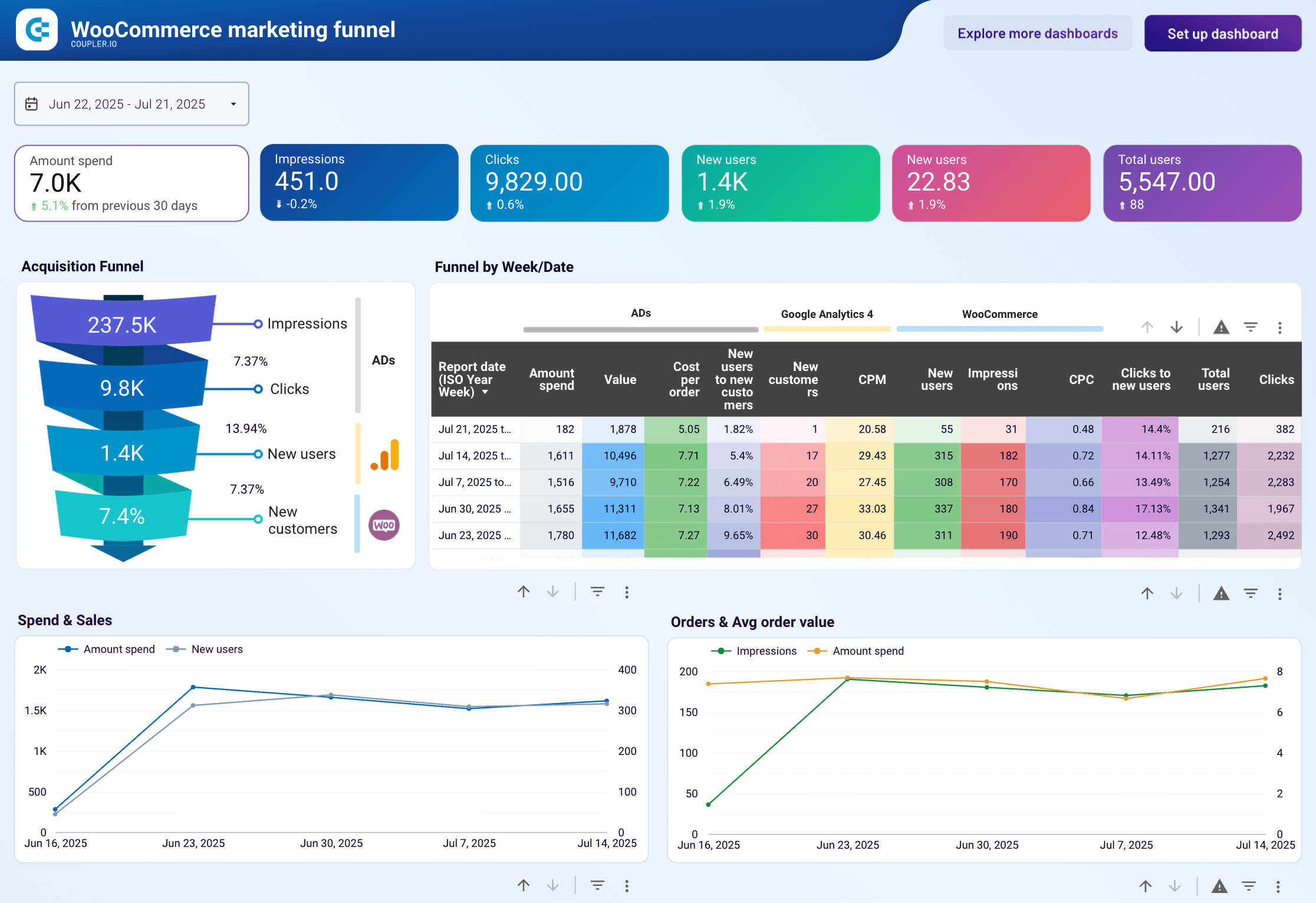
Hit the reports in Meta Ads Manager and chart your CPCs—right next to 2026 industry benchmarks for your sector. Scan the graph every week. That’s your cue to dig into bids, creative, targeting—all of it. The latest numbers at WordStream Facebook Ads statistics spell it out: fast pivots with fresh data are what actually block creeping CPC inflation as campaigns age.