How To Improve OBS Studio Recording Settings For Low-End PCs And Laptops
✅
Fact-Checked
Editorial Review
🧠
Expert Analysis
Sourced & Cited
🗓️
Updated 2026
Current & Accurate
Using Scene and Source Optimization Strategies
Beyond adjusting encoding and bitrate settings, improving your scenes and sources within OBS Studio can greatly improve performance on low-end PCs and laptops. Your system might falter with complex scenes packed with many high-res images, browser sources, or live effects, as they require extra processing power. Simplifying scenes by limiting the number of sources or using static images rather than animated or active content reduces CPU usage majorly. Also, consolidating multiple sources into a single source via pre-recorded clips or scenes cut down on real-time rendering overhead.
On resource-constrained devices, enabling preview consumes valuable GPU and CPU cycles without improving the recording output. Another practical approach involves disabling preview when recording. Disabling the preview from the OBS interface frees up resources, shifting more power toward encoding and cutting down lag and dropped frames. Also, consider using window capture instead of display capture when possible, as it tends to be less resource-intensive. These source choices can help maintain smoother recordings on machines with limited hardware capabilities.
User Experience with Improved OBS Studio on Modest Hardware
Recording on cheap PCs and laptops is tough. Fix those trouble spots, and the recording suddenly feels smoother—sometimes breathing new life into old machines. Many users, however, find that smart tweaks in OBS Studio transform the experience. You get better system speed and solid recordings by carefully balancing CPU load. Dropped frames and jerky video usually stem from CPU strain and limited GPUs.
Cutting down resource use doesn’t kill video quality as much as you might imagine. Smart compression keeps the picture clear enough while allowing the hardware to breathe. This is critical for integrated GPUs lacking dedicated video encoding chips. Tweaking frame rates and resolutions to match the system prevents buffer overload or weird sync slips between sound and image. A direct benefit: minimizing freezes or crashes, which often plague machines with limited RAM and single-core CPUs.
Some tips that really helped:
Software x264 or hardware like Intel Quick Sync Video or AMD VCE works depending on your setup.
Shrink your canvas or output resolution to ease rendering. Encoding runs smoother with barely any visible drop on smaller screens.
Use constant bitrate (CBR) with a moderate rate to keep data flowing steady, avoiding hiccups.
Kill extra video filters or effects. That frees the CPU for encoding rather than graphics tweaks.
Set audio bitrate just right to keep sound clear without hogging the CPU, especially when the GPU handles some audio work.
On laptops, battery life tanks quickly during recording. These optimizations help by cutting CPU heat and power spikes. Users notice their laptops run cooler and last longer on a charge. Default OBS settings often choke weaker machines. But tuning the encoder, dropping frames, and slowing presets feels way snappier. It’s a major shift.
Downsides appear when pushing for super HD or juggling multiple apps during recording. Still, for game streams, tutorials, and casual clips, the benefits outweigh the headaches. The system hits hard limits and struggles to keep up. So you have to monitor background software or shorten your sessions.
Longer recording times with fewer crashes.
Quality settings custom to your hardware’s real capabilities.
Clear guidelines for balancing image sharpness and smooth playback.
Tweaking OBS Studio open ups creative opportunities on machines many once dismissed as useless for streaming. This laser focus addresses many common headaches users post about in forums and help chats.
Users also gain a better grip on encoding basics: how integrated GPUs compare to software x264 and how bitrate spikes drain CPUs. Reviewing performance charts that track CPU and GPU use across settings pulls back the curtain on video recording tech. That cuts guesswork and frustration, pushing modest hardware well beyond expectations (give or take).
These tips let OBS Studio squeeze usable power from underpowered gear. Add troubleshooting guides, and users can fix frame drops or lag by spotting configuration errors early.
The learning curve is steep but the payoff reduces hardware costs (broadly speaking). If you’re switching from Streamlabs OBS or NVIDIA ShadowPlay, trimmed-down OBS settings save CPU and memory while keeping key features intact. Users get a better shot at steady work with their gear, even if it’s aging or budget-friendly.
These wins prove how flexible OBS Studio is—and how clever its users are—making it a top pick for creators on low-end PCs and laptops. For deeper info on resource management and encoding technology, check out the official Video Electronics Standards Association multimedia encoding docs. They lay out solid video capture and processing standards (VESA official standards).
Clarifying Common Concerns About Recording Performance and Settings
Tuning low-end PCs for streaming or recording is tricky (generally). Many folks searching for How To Improve OBS Studio Recording Settings For Low-End PCs And Laptops Hit walls around encoding choices, frame rates, and resolution limits. These issues must be spelled out plainly.
Choosing Between Software and Hardware Encoding on Integrated GPUs
On slower machines, that grind often causes lag or frame drops (roughly). Trying both while watching CPU and GPU use lets you find what fits your system’s built-in gear best. Software encoders like x264 lean hard on the CPU. Hardware encoders—Intel Quick Sync or AMD VCE—tap into integrated GPUs, easing CPU strain and often boosting performance a lot.
Managing Resolution and Frame Rate for Smooth Recording
Running maxed-out frame rates and high resolution crushes a low-end laptop or PC’s graphics and processing limit. Dropping resolution to 1280×720 and cutting FPS to 30 frames per second often smooths things out with far fewer dropped frames. The video still looks decent, and this keeps the system from choking. Resolution matters (for the most part).
Key OBS Settings That Minimize CPU Usage Without Sacrificing Output
Switch OBS’s encoder preset to faster or superfast. It cuts CPU work by simplifying compression. That means files will be a bit bigger or visuals a shade less crisp, but your processor gets a break. Also, keeping fewer sources, filters, and scenes active trims down CPU load during recording.
Troubleshooting Frequent Frame Drops and Stutter
Open Windows Task Manager or GPU-Z to spot what’s maxed out. Frame drops usually happen when your CPU or GPU can’t keep up. Lower your bitrate or switch to hardware encoding to ease the stress. Look for sneaky background apps eating CPU or memory and shut them before firing up OBS.
Audio Setup Tweaks for Low-End Devices
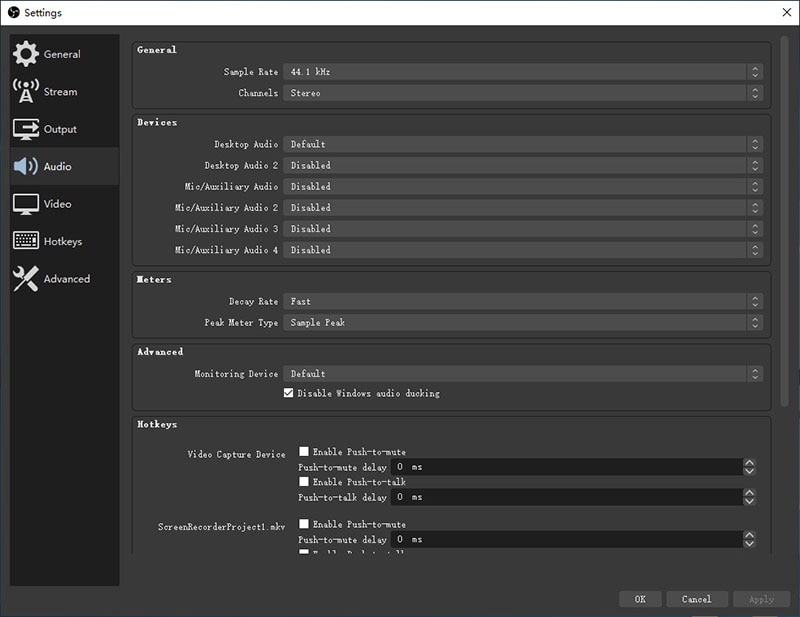
Cheap PCs and laptops often have basic audio gear, causing delays or sync glitches between sound and video. Bumping up audio buffers in OBS or flipping from “DirectSound” to “WASAPI” drivers can help steady things. Turning off audio filters unless you really need them keeps audio smooth and glitch-free.
It takes adjusting layers—from picking encoders to tweaking final output—to keep recordings crisp and stable on budget hardware. Improving OBS is never a quick fix. Balanced resolution, hardware encoding, and slimmed-down scenes ease pressure on your system and stop jerky captures.
Streamlabs OBS and XSplit Broadcaster have different looks but face the same speed bumps on low-end machines. NVIDIA ShadowPlay and AMD ReLive offer hardware-boosted recording but need compatible GPUs—often missing in integrated graphics. Bandicam, Action!, and Movavi Screen Recorder also rely on CPU and GPU and struggle if you push too far.
AMD’s developer guides explain how VCE speeds up rendering on low-power devices—must-reads for anyone choosing an encoder wisely. Independent tests give clear numbers on CPU and GPU load for OBS encoders on integrated chips. Using benchmark data in OBS setup saves you blind trial and error and steadies performance on budget gear.
Matching bitrate to your internet upload speed matters for streaming, but it also affects local recording smoothness. Smaller bitrates lighten encoder load but drop video quality (in practice). Experiment with bitrates from 1500 up to 3500 kbps to find your gear’s sweet spot.
Keeping drivers updated and trimming startup apps cleans up your PC’s act, keeping OBS snappy on lean rigs. Latency spikes pop up when background system tasks ramp up or drivers fall behind.
But careful OBS settings give the first and best shield when your hardware budget means limited power. The best way to dodge choppy video is a full system tune-up, not just fiddling with OBS.